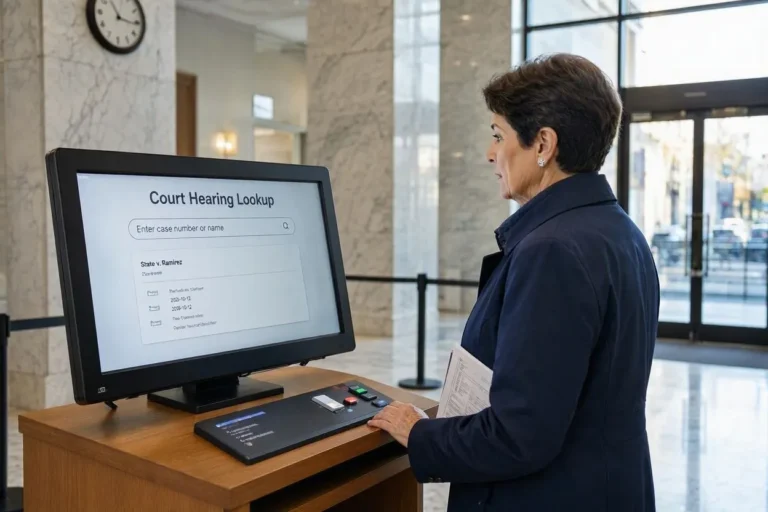

Small Claims Court Guide: How to File, Respond, and Collect a Judgment
A neighbor damages your fence and won’t pay for repairs. A former roommate keeps your security deposit. A contractor takes a deposit and never finishes the job. None of these require a lawyer or a five-figure legal bill to fix. A small claims court exists for exactly this kind of dispute, and this guide walks through eligibility, dollar limits, filing steps, hearing prep, and collecting once you’ve won, using the rules courts are actually applying in 2026.
What Small Claims Court Actually Does
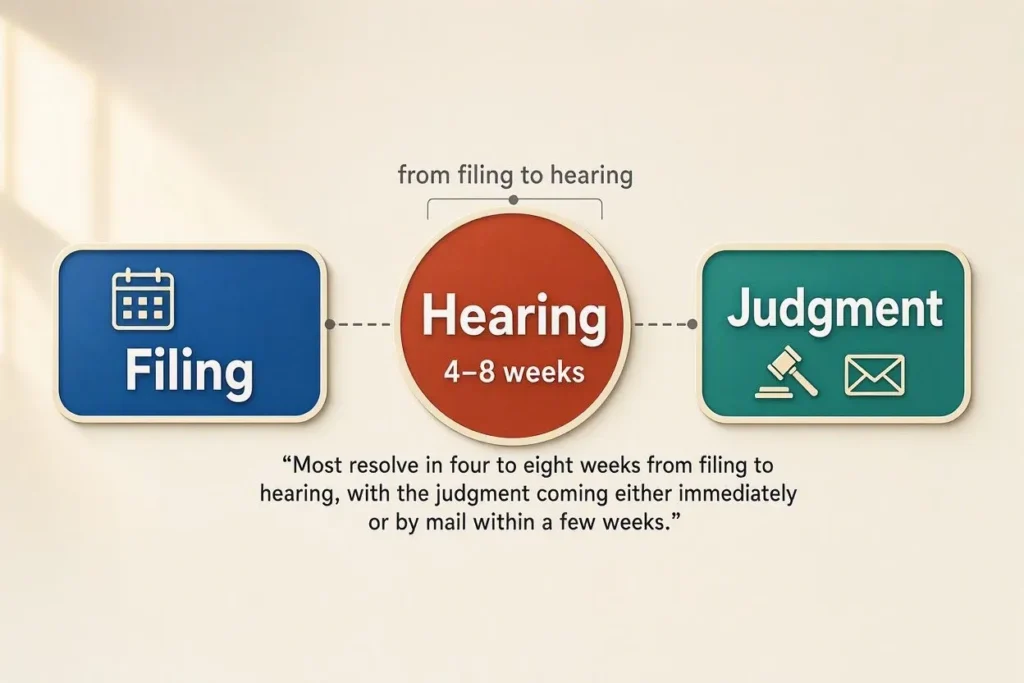
Small claims court is a simplified civil division built for individuals and businesses to resolve money disputes without hiring an attorney. Cases move fast here, and the evidence rules are looser than a formal trial. In most counties, filing gets you a court date within four to eight weeks. A tenant suing a landlord for a $2,000 deposit can file, serve the papers, and stand in front of a judge in under two months.
Attorneys generally can’t represent either side at the hearing (a handful of states carve out an exception for corporations), and judges, sometimes called commissioners or magistrates, rule either on the spot or by mail a few weeks later. Every state runs its own version under a different name: Justice Court in Texas, General Sessions Court in Tennessee, City/Town/Village Court in New York. The mechanics stay the same everywhere. A plaintiff files, a defendant responds, a judge decides, no jury involved. If you’re confused about which form to file, ask the court clerk, not the judge; judges can’t give legal advice, but clerks handle procedural questions all day.
Who Can Sue in Small Claims Court?
Any adult, business, or government entity can sue here, as long as the dispute is about money rather than criminal conduct or family law. Individuals file most often, but landlords, contractors, and small businesses use the court constantly to chase down unpaid invoices. Minors typically need a parent or guardian to file for them, and corporations often face stricter caps on how many cases they can bring per year. California, for instance, limits businesses to two claims a year above $2,500.
Unpaid loans, property damage, breach of contract, security deposit fights, minor auto accidents: these all qualify. Divorce, custody, criminal matters, and anything above the state’s dollar cap belong somewhere else entirely.
Government agencies can appear on either side too. A vendor owed $4,000 by a city contract can sue the municipality directly instead of wading through a separate administrative claims process, as long as sovereign immunity doesn’t shield that particular type of dispute. And landlord-tenant disputes, deposits, unpaid rent, damage beyond normal wear and tear, are among the most common types of small claims filings nationwide.
How Long Do You Have to File?
Before you get into dollar limits or paperwork, check whether you’re even still inside the window. The statute of limitations runs anywhere from two to six years depending on the type of dispute, and it varies by state. Written contract claims usually give you four to six years from the breach; oral agreements get a shorter window, typically two to four years. Property damage and personal injury claims run on their own separate clocks, often two to three years from the date of the incident.
Miss the deadline and the claim is barred permanently, no matter how strong your evidence is. Someone who waits five years to sue over a verbal loan might find the case time-barred in a state with a four-year oral contract limit, even with text messages proving the debt was real. Check the deadline before you write a demand letter or gather a single piece of evidence; there’s no point building a case the court won’t even hear.
How Much Can You Sue For?
The cap ranges from $2,500 to $25,000 depending on the state. Tennessee and Delaware sit at the top with $25,000; Kentucky sits near the bottom at $2,500. Most states land somewhere between $5,000 and $15,000. California splits its limit by who’s filing: individuals can claim up to $12,500, while businesses and partnerships are capped at $6,250.
Limits below reflect figures reported as of early 2026 and are subject to change; verify the current cap with your local court clerk before filing.
| State | Individual Limit | Notes |
| California | $12,500 | Businesses limited to $6,250 |
| Texas | $20,000 | One of the highest limits nationwide |
| Tennessee | $25,000 | Heard in General Sessions Court |
| Delaware | $25,000 | Tied for highest limit |
| New York | $10,000 | Drops to $3,000–$5,000 in some town/village courts |
| Kentucky | $2,500 | One of the lowest limits nationwide |
| Mississippi | $3,500 | Lower-tier limit |
| Florida | $8,000 | Small Claims Rules apply |
| Georgia | $15,000 | Magistrate Court handles filings |
| Ohio | $6,000 | Filed in county or municipal court |
If your claim exceeds the cap, you’ve got three options: waive the excess and stay in small claims, transfer to a higher civil court, or split the claim into separate smaller cases where state rules allow it. A contractor owed $14,000 in California could waive $1,500 and sue for the full $12,500 rather than dealing with a pricier civil division. These numbers move as state legislatures update them, so confirm the current limit with your local court clerk before you file anything.
How Much Does It Cost to File?
Filing fees usually run $30 to $100, scaled to the size of the claim. Courts on a sliding scale charge less for a $500 dispute than a $10,000 one. Can’t afford it? Ask for a fee waiver; most courts grant these based on income or public benefits eligibility.
Win, and you typically recover the filing fee as part of the judgment, along with reasonable service costs. Lose, and that fee is gone for good. Add service-of-process costs, often $20 to $75 depending on the method, and total upfront expenses for a straightforward case land somewhere between $50 and $175 in most counties.
| Cost Item | Typical Range | Recoverable if You Win? |
| Filing fee | $30–$100 | Yes, usually added to the judgment |
| Service of process (certified mail) | $20–$40 | Yes, usually added to the judgment |
| Service of process (process server or sheriff) | $40–$75 | Yes, usually added to the judgment |
| Fee waiver (income-qualified) | $0 | N/A |
| Total upfront cost, straightforward case | $50–$175 | Mostly, if you win |
How to File a Small Claims Case
Filing breaks down into four steps: send a demand letter, complete the claim form, pay the filing fee, and formally serve the defendant. Skip service and you can lose the case even after winning a favorable ruling.
Step 1: Send a Demand Letter
A demand letter states what’s owed, why, and a deadline for payment before you take legal action. A meaningful share of disputes resolve at this stage alone, since a formal letter tells the other side you’re serious. Many states actually require proof that you sent a demand before a judge will hear the case, so keep a dated copy and any delivery confirmation.
Step 2: Complete Your Claim Form
Most states use a standard form (California’s is SC-100) asking for the amount owed, the defendant’s full legal name and address, and a brief summary of what happened. Get the details right: a wrong business name or outdated address can delay service by weeks. Attach invoices, contracts, or repair estimates as exhibits rather than just describing them in the narrative.
Step 3: File and Pay the Fee
Submit your form at the courthouse with jurisdiction, generally where the defendant lives, where the business operates, or where the incident happened. You can file in person, by mail, or online in counties that offer e-filing. Once the clerk accepts your paperwork, the court assigns a hearing date, usually four to eight weeks out.
Step 4: Serve the Defendant
California, like most states, requires formal service by someone other than you handing the papers over yourself. Certified mail, a professional process server, or the county sheriff’s civil division all work, and each has its own fee and proof-of-service form. Courts postpone or dismiss hearings when that proof is missing, so file it with the clerk well before the scheduled date.
What Happens If You’re Sued?
You’ve got options: respond, file a counterclaim, or ask for a postponement. Ignore the claim entirely and the court hands the plaintiff a default judgment, meaning they win automatically without a hearing.
If you disagree with part of the claim, file a response laying out your side, and in states that allow it, add a counterclaim if the plaintiff owes you money too. Someone facing a landlord’s deposit-deduction claim, for example, might counterclaim over personal property left behind in the unit. Got a scheduling conflict? You can request a continuance, though courts generally want a real reason and advance notice, not a last-minute excuse.
How to Prepare Evidence and Witnesses
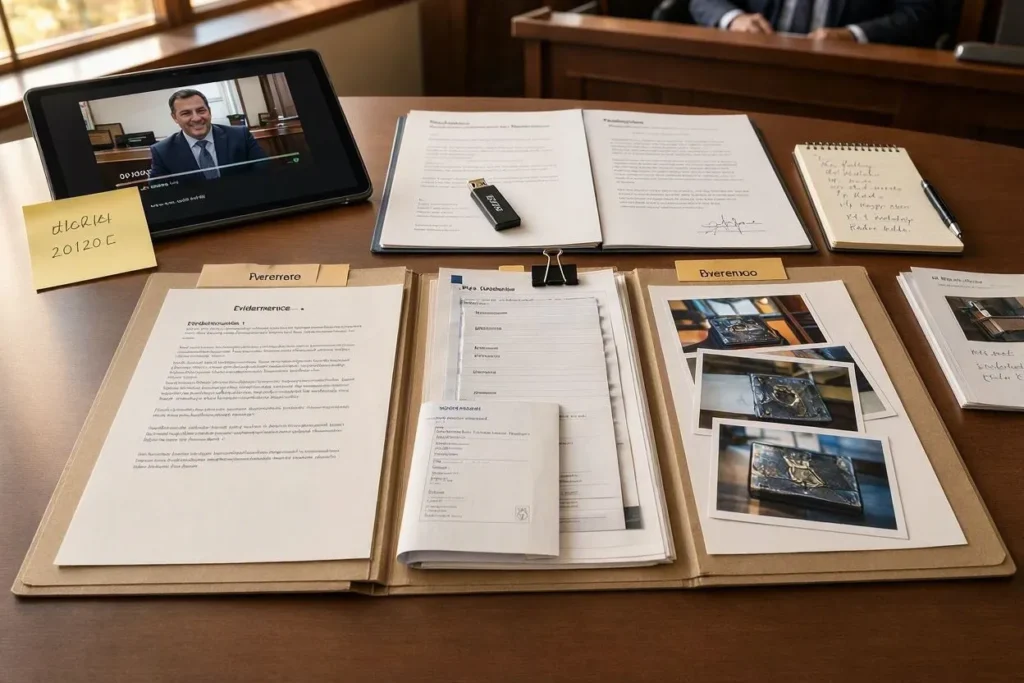
Preparing evidence means organizing documents, photos, and witness statements that directly back up the dollar amount you’re claiming. Judges here decide cases mostly on paperwork, not legal argument, so a folder of receipts usually beats an eloquent speech.
A strong evidence packet, organized in the order the story unfolds, typically includes:
- A copy of the original contract, lease, or invoice
- Photos or videos showing damage, defective work, or property condition
- Text messages, emails, or letters referencing the dispute
- Repair estimates or receipts showing actual cost
- A written timeline with specific dates
Bring witnesses with direct, firsthand knowledge. A mechanic who inspected the damaged car carries more weight than a friend repeating what they heard secondhand. Courts can subpoena a reluctant witness, though most small claims cases never need one. Incomplete evidence is the single most common reason plaintiffs lose cases they should have won.
What Happens at the Hearing?
A small claims hearing is informal and judge-only, usually 10 to 20 minutes per case. No jury, and the formal evidence rules from criminal or civil trials don’t apply. The plaintiff goes first, laying out the claim and supporting documents, then the defendant responds with any counter-evidence.
Judges tend to ask direct, clarifying questions rather than let anyone talk for ten minutes straight, so concise answers beat rehearsed speeches. Decisions come either right from the bench or by mail within a few weeks, depending on how the court usually handles it. Need an interpreter and one’s not available that day? Several states, California included, will just push the case to a later date rather than proceed without one.
How to Collect a Judgment
Winning doesn’t mean getting paid. Collection is on you, and that catches a lot of first-time filers off guard, since courts award the judgment but don’t act as a collection agency.
A few tools available once you’ve won:
- Wage garnishment: a portion of the debtor’s paycheck redirected to you through their employer
- Bank levy: funds seized directly from the debtor’s account through a court-issued writ
- Property lien: a legal claim against real estate the debtor owns, paid out when it sells or refinances
- Judgment debtor examination: a court-ordered hearing where the debtor discloses income, assets, and accounts under oath
If a debtor goes quiet and stops responding, request a debtor examination to track down a bank account worth levying. Judgments typically stay enforceable for around 10 years, though the exact term and renewal rules depend on the state, so someone’s temporary inability to pay doesn’t erase what they owe.
Can You Appeal?
If you’re the plaintiff and you lost, generally no. Defendants, on the other hand, usually keep the right to appeal to a higher civil court, where the whole case gets tried again from scratch rather than just reviewed.
That asymmetry is intentional. Plaintiffs already chose the cheap, streamlined forum, so the tradeoff is finality. A defendant who loses a $9,000 judgment can request a trial de novo in civil court, reopening the case entirely with formal evidence rules and the option to hire a lawyer this time. Appeal windows tend to be short, often around 30 days from judgment but set independently by each state, so speed matters more than building the perfect case.
Small Claims Court vs. Mediation vs. Civil Court
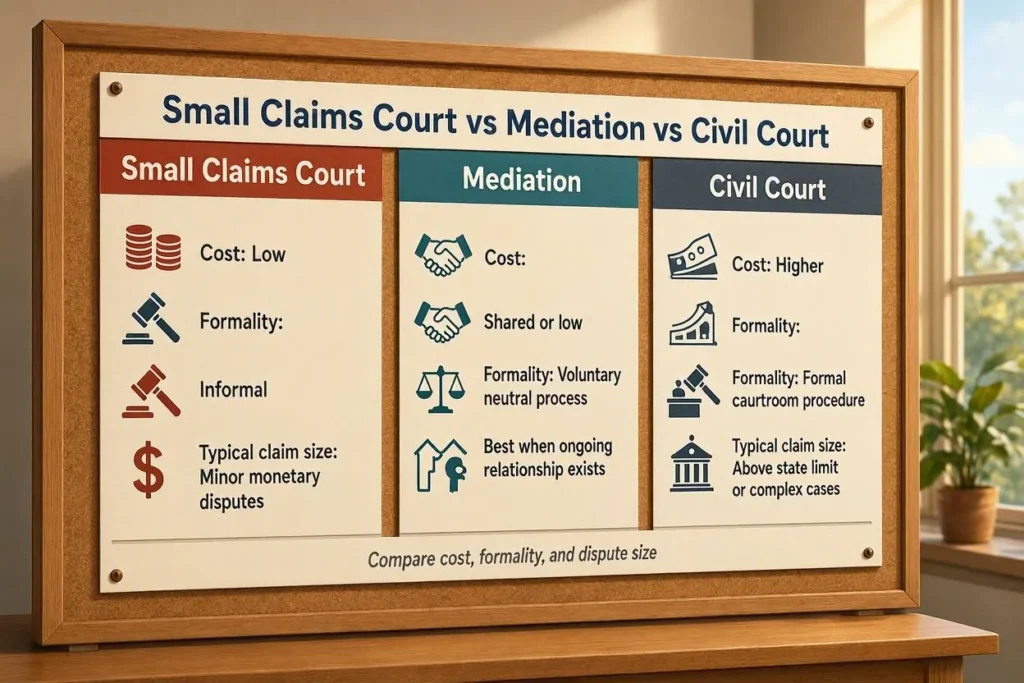
These three differ mainly in cost, formality, and the size of dispute they’re built for. Mediation brings in a neutral third party to help both sides reach a voluntary agreement, and it works well when an ongoing relationship, like a landlord and tenant who plan to keep dealing with each other, makes a court fight counterproductive. Civil court is for claims above the state limit or disputes that need formal procedure, attorneys, and months rather than weeks.
| Feature | Small Claims Court | Mediation | Civil Court |
| Dollar range | Up to state limit ($2,500–$25,000) | Any amount | Above the small claims limit |
| Attorney allowed | Generally no | Optional, rarely used | Yes, often necessary |
| Outcome | Binding judgment from a judge | Voluntary agreement, not guaranteed | Binding judgment or settlement |
| Typical timeline | 4–8 weeks to hearing | Days to a few weeks | Several months to over a year |
| Filing/session cost | $30–$100 | Often free or low-cost through community programs | Several hundred to several thousand dollars |
| Best fit | Clear-cut money disputes under the state cap | Disputes where the relationship needs to continue | Complex or high-dollar disputes |
Three questions decide which forum fits: how much money’s involved, whether the parties need to keep a relationship intact, and how fast you need a resolution. Take a landlord-tenant dispute over $1,200 in unpaid rent. Mediation keeps things civil if the tenant’s staying. Small claims wrap it up in under two months if the relationship’s already over. Civil court would be overkill for a four-figure dispute either way.
Conclusion
Small claims court gives ordinary people and small businesses a fast, cheap path to recovering money without a lawyer or a months-long wait for a civil trial date. Winning comes down less to legal argument and more to preparation: a documented demand letter, an accurately filled-out claim form, proper service, and an organized evidence packet. The dollar limit, filing fee, and specific procedural rule always come down to the state and county where you’re filing, though, so confirm those details with your local court clerk before submitting anything.
FAQs

Amanda Brooks
Amanda Brooks leads JusticeInTown’s legal, justice, and community advocacy content division. She holds a background in legal research and public policy and specializes in topics related to civil rights, access to justice, legal awareness, and community issues. With years of experience researching legal and social justice topics, Amanda brings a careful, research-driven approach to complex legal information and public-interest issues. She is the primary author of JusticeInTown’s legal guides, justice-related resources, and community-focused content, helping readers better understand their rights, legal options, and the issues affecting their communities.
Related Posts