
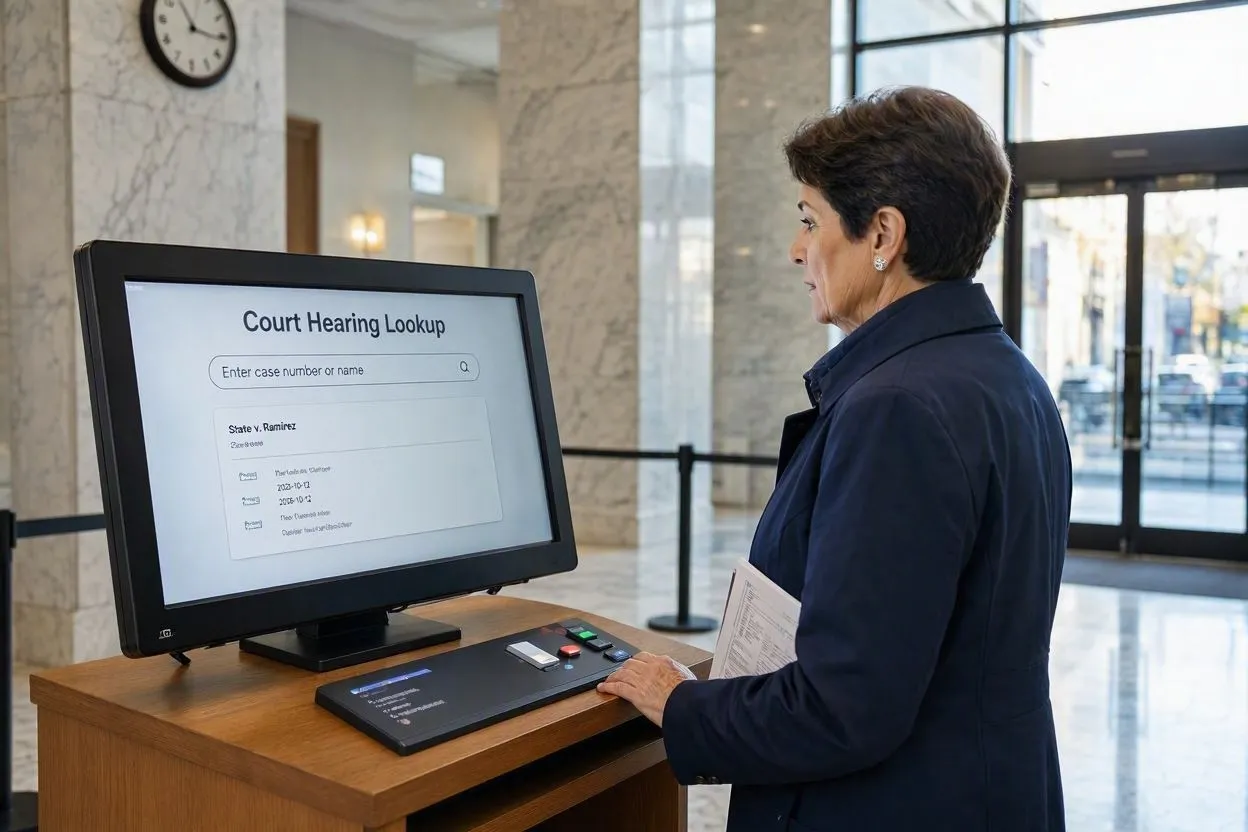
Court Hearing Lookup: How to Find Your Court Date, Time, and Case Status
The fastest way to find your court date is to check the paperwork you already have. Your citation, summons, subpoena, or notice to appear usually lists the date, time, and courtroom. If you’ve lost it or need to confirm nothing has changed, search the court’s official online case search using your case number or your full name. If that doesn’t work, call the clerk of court. The rest of this guide explains each route and what to do when it fails.
What Is a Court Hearing Lookup?
A court hearing lookup is a search of a court’s public docket to confirm when and where a case will be heard. A docket is the running record of everything filed and scheduled in a case. It usually shows:
- the hearing date and time
- the courtroom
- the assigned judge
- the case type (civil, criminal, traffic, family, probate, small claims)
- the case status (open, continued, dismissed, disposed)
Courts publish dockets through their own case search portals, not through Google. A general web search rarely shows your live hearing information.
Before You Search: What You’ll Need
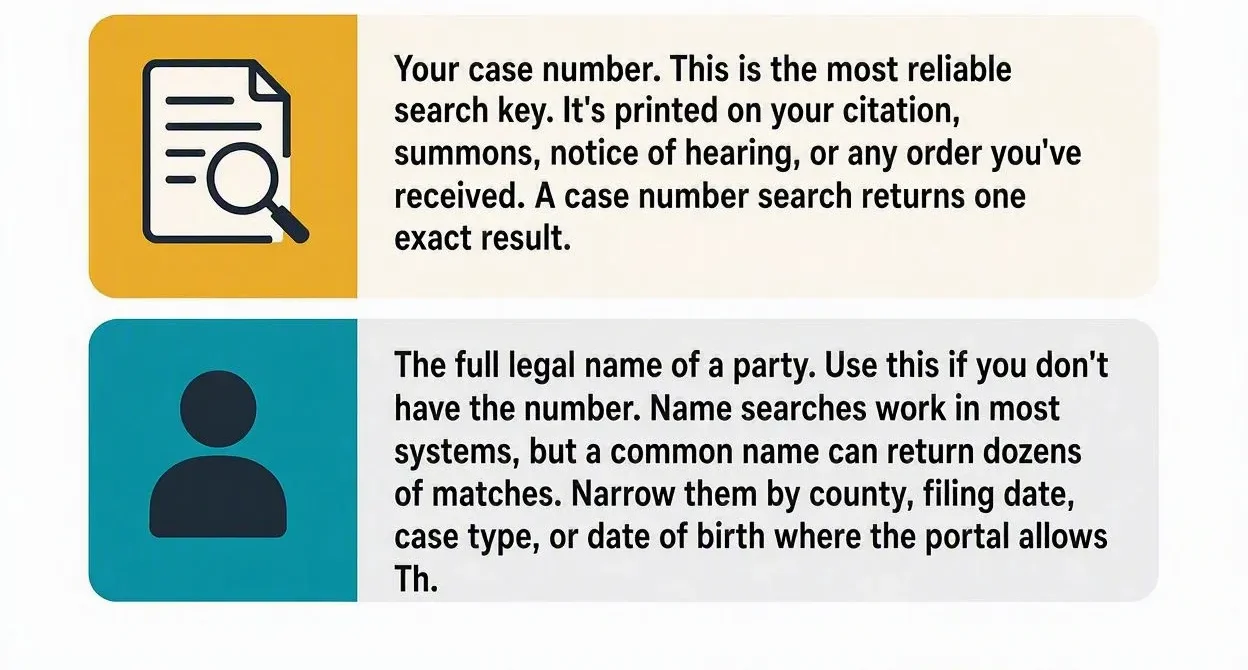
Your case number. This is the most reliable search key. It’s printed on your citation, summons, notice of hearing, or any order you’ve received. A case number search returns one exact result.
The full legal name of a party. Use this if you don’t have the number. Name searches work in most systems, but a common name can return dozens of matches. Narrow them by county, filing date, case type, or date of birth where the portal allows it.
The court and county. State, county, municipal, and federal courts each run separate systems. The courthouse address on your paperwork tells you which one to search.
How to Read a Case Number
State courts format case numbers differently. Many use a year, a case-type code, and a sequence number, such as 2026-CV-004521. Here, CV means civil, CR means criminal, TR or TC often means traffic, and DV means domestic violence. Federal courts add an office code in front, as in 1:26-cv-04521. If your number looks different, that’s normal. Enter it exactly as printed.
How to Find Your Court Date Online, Step by Step
Step 1: Identify the Right Court
A traffic ticket or misdemeanor is usually in a municipal, county, or district court. Divorce, custody, and probate cases are in a state family or probate court. A federal lawsuit, federal criminal case, or bankruptcy is in a U.S. district or bankruptcy court. When in doubt, go by the courthouse name printed on your paperwork.
Step 2: Go to the Court’s Official Case Search
Search for your state’s name plus “court case search” or “find my court date,” and pick the result on a .gov or official judiciary domain. The system goes by different names depending on where you are:
| Court | Where to search |
| Federal courts | PACER Case Locator, or the individual court’s CM/ECF site |
| New York | eCourts (WebCriminal, WebCivil, WebFamily) |
| Maryland | Maryland Judiciary CaseSearch |
| Washington | Find My Court Date, Odyssey Portal, re:Search |
| North Carolina | eCourts portal and the statewide court date search |
| Many counties | The county clerk’s own portal (for example, eCaseView in Palm Beach County, Florida) |
Skip third-party court records and background check sites. They often show stale dates, and a wrong date can cost you a warrant or a default.
Step 3: Search by Case Number or Name
Enter the case number exactly as printed, including dashes if the portal asks for them. If you search by name, try last name first, and then try spelling variations and middle initials.
Step 4: Read the Docket or Calendar Entry
Open the case and look for a section labeled “hearings,” “events,” “scheduled events,” or “court scheduling information.” Check the date, time, courtroom, and judge.
If you see the word continuance, the hearing was moved. Look for a newer entry with the current date. Some courts list civil hearing dates only inside a “notice of hearing” document, not on the summary screen, so open the documents tab if the date isn’t obvious.
Step 5: Check Again the Day Before
Dates change. A hearing can be continued, reassigned, or moved online with little notice. Recheck the docket the day before and the morning of your hearing.
Other Ways to Find Your Court Date
Call the clerk of court. The clerk’s office can confirm your date, time, courtroom, and whether the hearing is in person or virtual. Have your case number or full name and date of birth ready.
Check the court calendar. Many courts post daily or weekly calendars (sometimes called dockets or court lists) searchable by name, case number, judge, or courtroom.
Sign up for reminders. Several states send free text or email alerts when a court date is set or changes. New York’s eTrack and North Carolina’s court date notifications are two examples. Check whether your state offers one; it’s the easiest way to avoid a missed date.
Ask your lawyer or public defender. If you have one, they’ll have the schedule.
Crime victims can often register with VINE (VINELink) or the prosecutor’s victim-witness office for notices about a defendant’s case.
Why Your Case Isn’t Showing Up Online
If your search comes back empty, check these in order:
- Wrong court or county. Try the neighboring level (municipal vs. county, state vs. federal).
- A typo or name variation. Try the case number instead of the name, or vice versa.
- Too new. Recently filed cases and fresh citations can take a day or more to appear.
- Not published online by design. Sealed and expunged cases, juvenile and dependency cases, adoptions, many mental health matters, and some domestic violence and family cases are confidential or restricted. A hearing can be scheduled even though nothing appears online.
- Case type not in the portal. Some courts leave certain case types out entirely. In Washington, D.C., for example, criminal citation cases aren’t in the online search, and you have to contact the police district that issued the citation for your court date.
In any of these situations, call or email the clerk. It’s the only reliable way to confirm a date for a case that isn’t online.
How to Join a Virtual or Remote Hearing
Many courts now hold some hearings by video (on platforms such as Zoom, Microsoft Teams, or Webex) or by phone. The link or dial-in number usually appears in the docket entry, on your hearing notice, or on the judge’s or courtroom’s web page. If you can’t find it, call the clerk before the hearing starts. Don’t wait for it to arrive. Missing a virtual hearing is treated the same as missing one in person.
Join a few minutes early, use your full name as your display name, and have your case number handy.
What Happens If You Miss a Court Date?
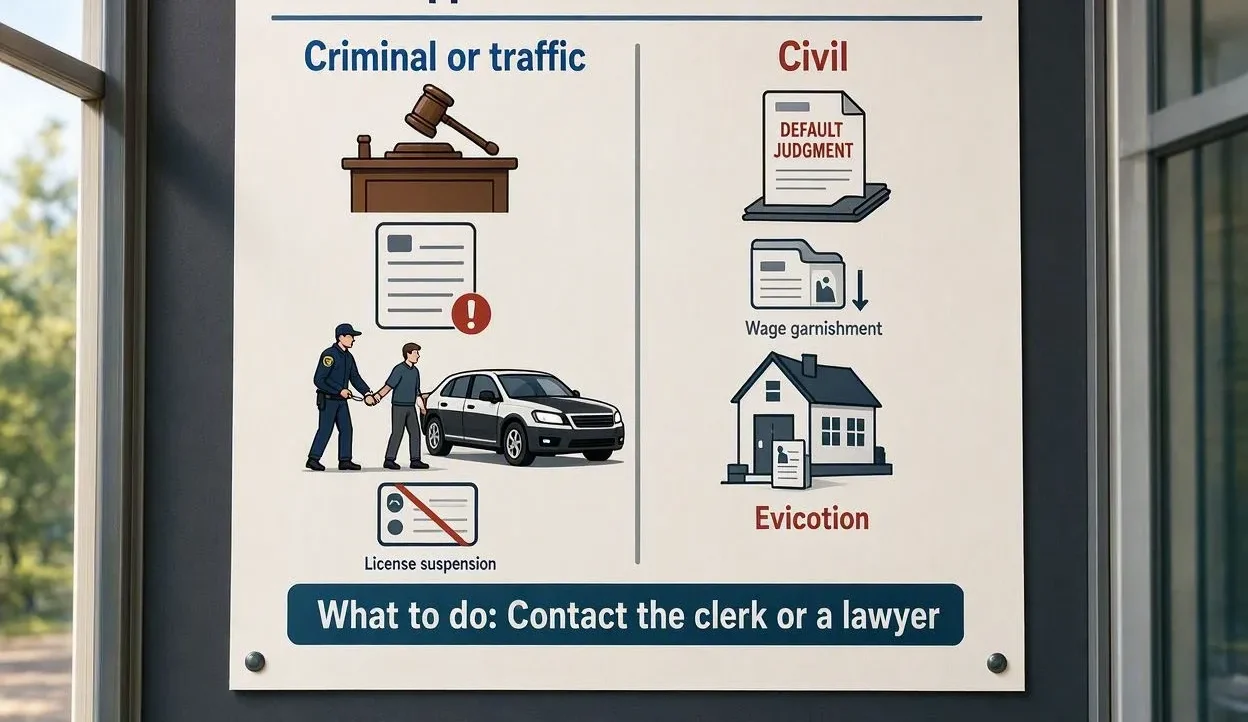
In a criminal or traffic case, the judge can issue a bench warrant for failure to appear. Police can then arrest you and bring you before the court. Some states also suspend your driver’s license or add a separate failure-to-appear charge.
In a civil case, the other side can get a default judgment. They win without you presenting your side, which can lead to wage garnishment or eviction.
What to do: Contact the clerk or a lawyer right away. You may be able to file a motion to vacate or set aside the default, or ask the court to recall the warrant. Deadlines vary a lot by state and case type. Federal rules allow up to a year for some reasons, but many state deadlines are much shorter, so act the same day you find out.
If you know you can’t attend, ask for a continuance (a new date) before the hearing, not after. Your court’s website or clerk can tell you how.
How Much Does a Court Case Search Cost?
Checking a hearing date is free in most state courts.
Federal courts use PACER, which charges $0.10 per page, capped at $3 per document. If your charges stay at $30 or less in a quarter, they’re waived, so a quick date check is usually free.
Costs apply when you need copies or older records. Federal district court fees, as of the December 1, 2023 schedule:
| Service | Fee |
| PACER online access | $0.10 per page, $3 cap per document, waived at $30 or less per quarter |
| Paper copies from the clerk | $0.50 per page |
| Certification of a document | $12 |
| Exemplification | $24 |
| Clerk records search | $34 per name or item |
| Retrieving archived records from a Federal Records Center | $70 first box, $43 each additional box |
State court copy and certification fees vary, so check your court’s fee schedule.
A Warning About Court Date Scams
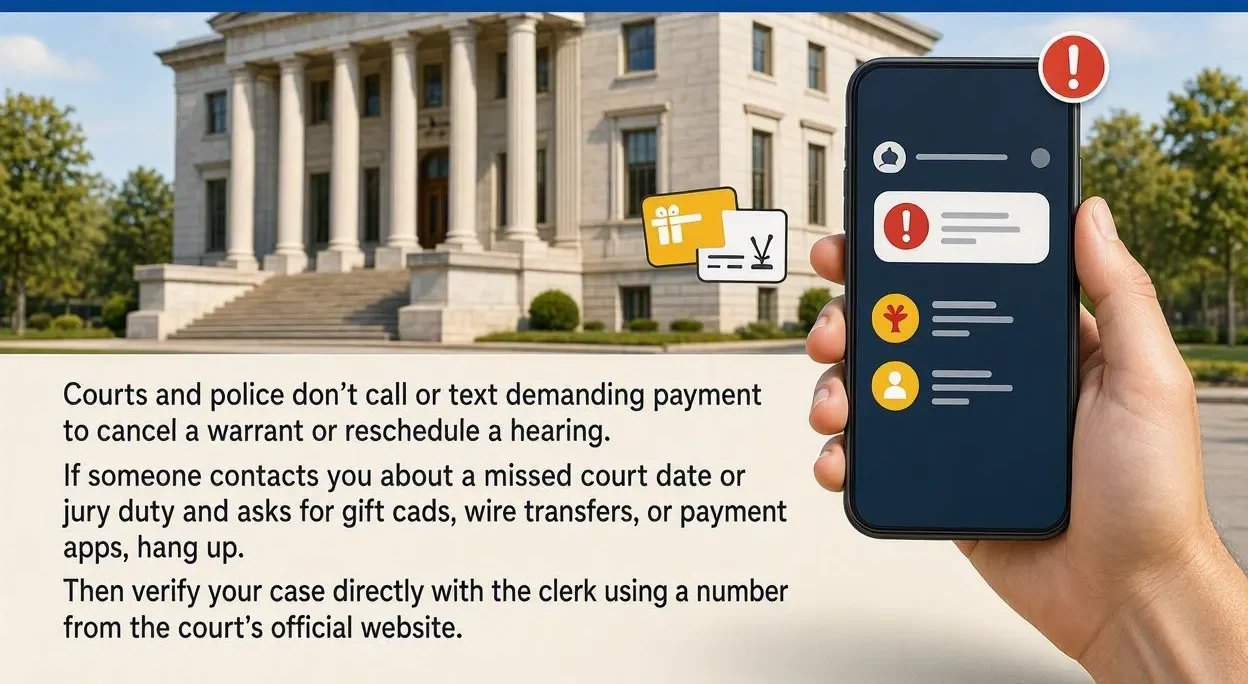
Courts and police don’t call or text demanding payment to cancel a warrant or reschedule a hearing. If someone contacts you about a missed court date or jury duty and asks for gift cards, wire transfers, or payment apps, hang up. Then verify your case directly with the clerk using a number from the court’s official website.
Conclusion
Finding your court date comes down to three moves. Start with your paperwork, since the citation, summons, or notice to appear usually has the date, time, and courtroom. Then search the court’s official case search by case number or full name, and read the docket for continuances. If the case isn’t online, call the clerk of court. That call settles sealed, juvenile, brand-new, and excluded cases faster than any website.
Don’t treat the date as final once you’ve found it. Sign up for text or email reminders if your state offers them, and check the docket again the day before your hearing. If you’ve already missed a court date, contact the clerk or a lawyer today. The sooner you act, the more options you have for recalling a warrant or setting aside a default judgment.
FAQs

Amanda Brooks
Amanda Brooks leads JusticeInTown’s legal, justice, and community advocacy content division. She holds a background in legal research and public policy and specializes in topics related to civil rights, access to justice, legal awareness, and community issues. With years of experience researching legal and social justice topics, Amanda brings a careful, research-driven approach to complex legal information and public-interest issues. She is the primary author of JusticeInTown’s legal guides, justice-related resources, and community-focused content, helping readers better understand their rights, legal options, and the issues affecting their communities.
Related Posts