How to Get Free Legal Help in 2026: 7 Proven Ways
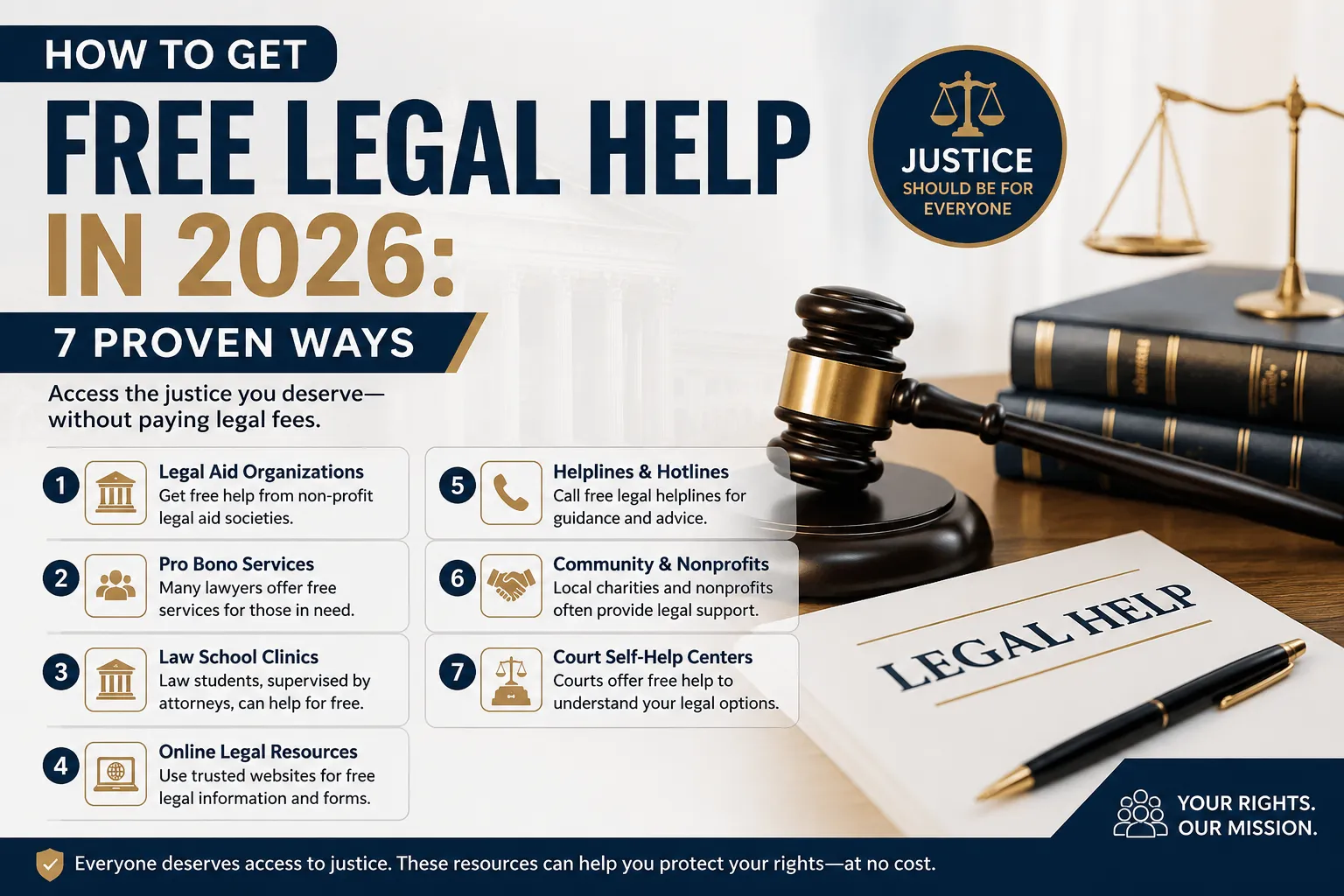
You can get free legal help in 2026 through 7 main channels: legal aid offices, law school clinics, pro bono programs, court self-help centers, the ABA Free Legal Answers portal, state bar referral services, and government-funded public defenders. Each option has its own eligibility rules, timelines, and case types.
Legal fees in the United States run between $100 and $300 per hour, according to USLegal.com. That cost stops millions of people from protecting their rights each year. The good news: a nationwide network of free resources exists specifically for people who cannot afford private attorneys.
What Free Legal Help Actually Means in 2026
Free legal help covers 3 distinct service models: full representation, brief advice, and self-help information. Full representation means an attorney handles your entire case. Brief advice gives you a 30-minute consultation or a written answer to one question. Self-help information provides guides, forms, and workshops you complete without attorney involvement.
The Legal Services Corporation (LSC), an independent nonprofit created by Congress in 1974, funds 132 independent nonprofit legal aid organizations across all 50 states, Washington D.C., and U.S. territories. These organizations focus exclusively on civil legal problems — not criminal cases.
Civil legal problems include housing disputes, family law matters, consumer debt, immigration status, and public benefits. Criminal cases follow a separate path: if you face criminal charges and cannot afford an attorney, the court appoints a public defender at no cost to you.
How to Get Free Legal Help Through Legal Aid Offices
To get free legal help through a legal aid office, visit LawHelp.org, enter your state, and locate the nearest LSC-funded program in your area. Legal aid offices are nonprofit agencies that employ fully licensed attorneys at no charge to qualifying clients.
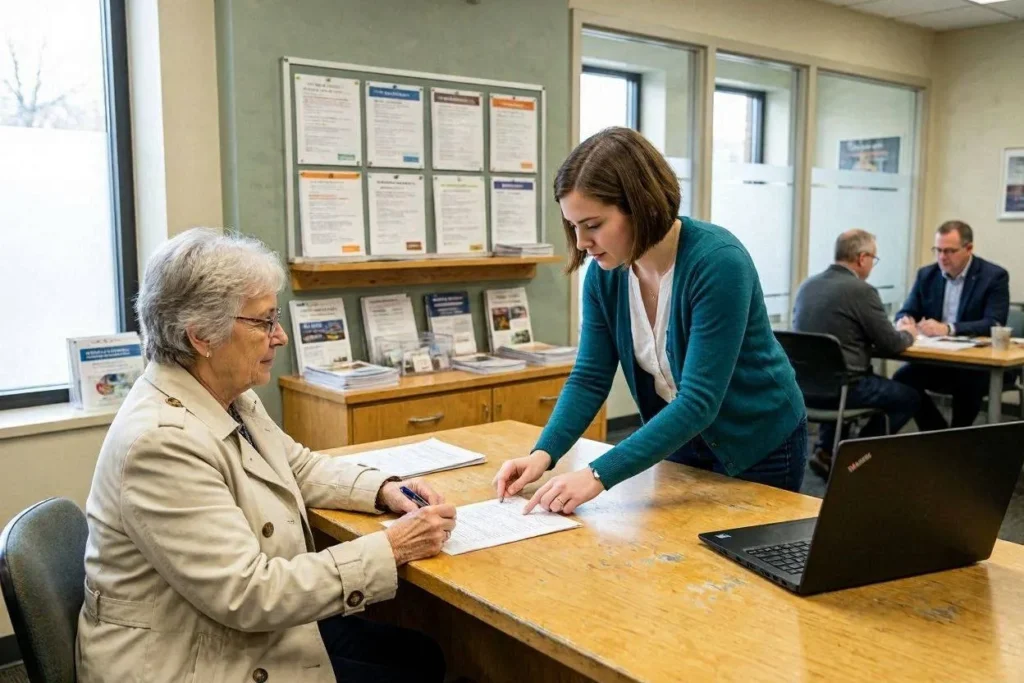
Most legal aid offices serve clients with household incomes at or below 125% of the Federal Poverty Level (FPL). For 2026, that equals approximately $18,225 for a single person or $37,440 for a family of 4. Some programs extend eligibility to 200% FPL, particularly for seniors, veterans, and domestic violence survivors.
Legal aid attorneys handle cases involving eviction, foreclosure, domestic violence protective orders, child custody, public benefits denials, and immigration. Everything you share with your legal aid attorney stays confidential — the same attorney-client privilege that applies to private attorneys applies here.
How to Check Your Eligibility for Legal Aid
To check your eligibility for legal aid, call your local legal aid office directly or use the intake tool on LawHelp.org. Staff members ask about your household income, family size, and the type of legal problem you face.
Prepare these 4 pieces of information before calling:
- Your total household monthly income from all sources
- The number of people living in your household
- A one-sentence description of your legal problem
- Your county or zip code so staff can confirm your service area
If your income exceeds the limit, ask if the office offers a sliding-scale payment option or can refer you to another resource. Many offices cannot serve everyone who applies due to high demand. If you receive a denial, reapply in 90 days — case capacity changes regularly.
What to Bring to Your First Legal Aid Appointment
To prepare for your first legal aid appointment, gather 5 types of documents: a government-issued photo ID, proof of income (pay stubs or the most recent tax return), all court notices or legal documents related to your case, a written timeline of key events, and contact information for any opposing parties.
Bring physical copies of every document — do not rely on phone screenshots alone. Attorneys review paper documents more quickly during intake interviews. Arrive 15 minutes early so intake staff can process your paperwork before your attorney consultation begins.
How to Get Free Legal Help from Law School Clinics
To get free legal help from a law school clinic, contact the law school nearest to you and ask about the clinical legal education program. Law school clinics operate in 3 formats: live-client clinics, simulation clinics, and externship programs. Live-client clinics provide actual legal representation supervised by licensed law professors.
Harvard Law School’s Legal Aid Bureau handles over 300 cases annually, focusing on housing, family law, and public benefits. Yale Law School’s Jerome N. Frank Legal Services Organization handles immigration, civil rights, and environmental law cases. Most other accredited law schools run comparable programs in the practice areas most common in their region.
Law students perform the same work as junior associates at a law firm — drafting motions, conducting legal research, interviewing clients, and appearing in court — all under direct supervision of a licensed professor. The quality of representation matches that of a private attorney for routine civil matters.
To apply, contact the law school’s clinical program office by phone or email. Most clinics do not advertise heavily, so a direct call gets faster results than searching online. Expect a 1–3 week wait for an initial intake appointment.
How to Get Free Legal Help Online Through ABA Free Legal Answers
To get free legal help online through ABA Free Legal Answers, visit abafreelegalanswers.org, create an account, and post your civil legal question. The platform operates in 40 states and matches your question with a volunteer attorney licensed in your state.
Attorneys typically respond within 24–72 hours. You receive a written answer to your specific question at no cost. The service covers family law, housing, consumer rights, and employment issues. The platform does not handle criminal cases, immigration matters, or cases with active court deadlines — check those restrictions before posting.
Income limits vary by state, but most participating programs serve households at or below 200% of the Federal Poverty Level (FPL). The site checks your eligibility during account creation. If you do not qualify, the platform directs you to other resources in your state.
How to Get Free Legal Help at a Court Self-Help Center
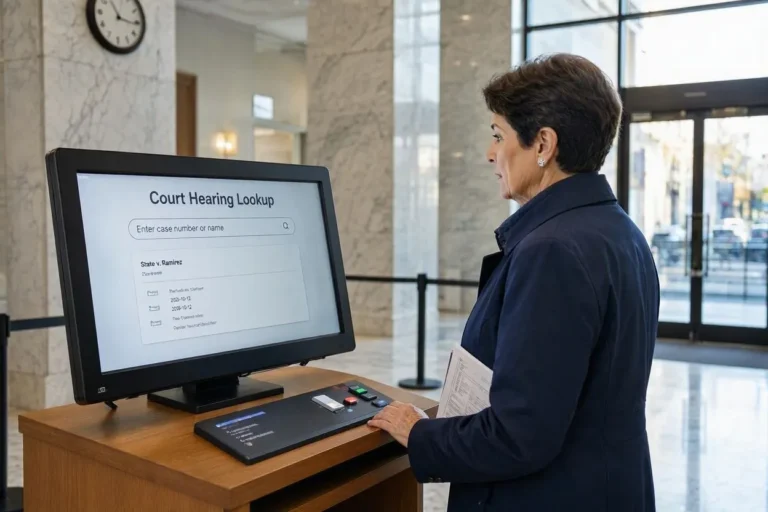
To get free legal help at a court self-help center, visit your local courthouse and ask the clerk where the self-help center is located. Every California superior court — and most courts nationwide — operates a free self-help program for people without attorneys. You can also find a lawyer through a referral service if the self-help center confirms you need full representation.
Court self-help centers provide 4 specific services: explaining court procedures, helping you complete the correct forms, directing you to the right courtroom or filing window, and giving you printed self-help guides. Staff members cannot tell you what legal strategy to choose — that constitutes legal advice reserved for licensed attorneys.
Self-help centers work best for uncontested divorces, small claims matters, name changes, simple protective orders, and traffic hearings. Bring your case number if you already filed. If you have not filed yet, bring your ID and a written summary of your situation.
Many public law libraries sit inside or adjacent to courthouses and offer a second layer of free support. Law librarians help you locate legal forms, court rules, and case law. Some libraries host “Lawyer in the Library” days — scheduled sessions where volunteer attorneys answer questions in person.
Free Legal Help for Veterans, Seniors, and Immigrants
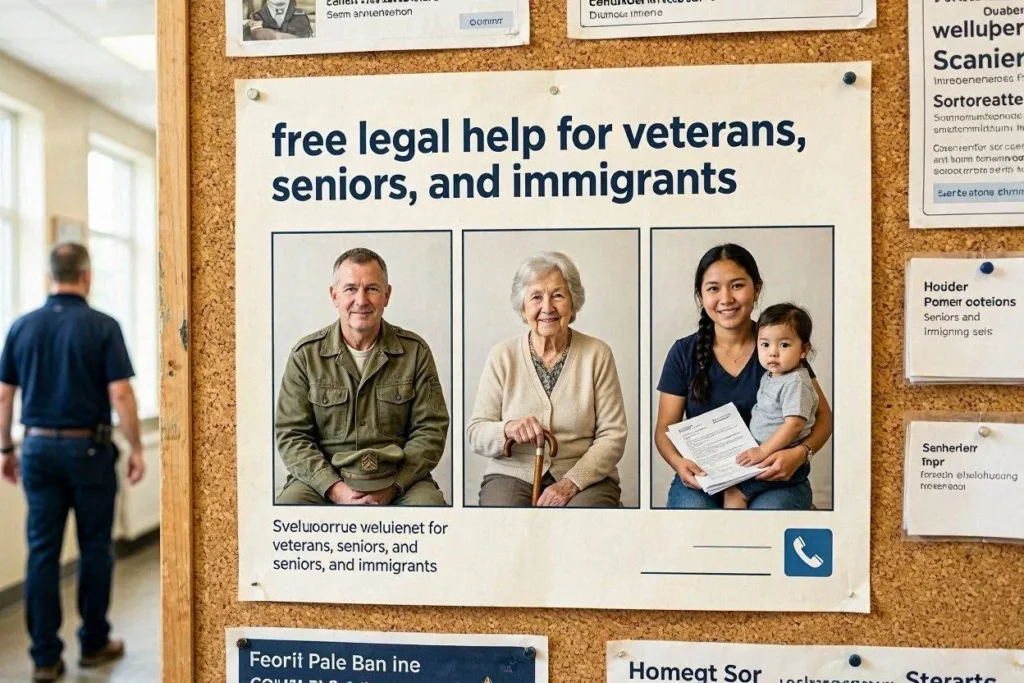
Veterans, adults aged 60 and older, and immigrants each have dedicated free legal programs beyond the general legal aid system. These 3 populations qualify for specialized services regardless of income in many cases.
Free Legal Help for Veterans
To get free legal help as a veteran, contact the Veterans Consortium Pro Bono Program, Stateside Legal, or the National Veterans Legal Services Program (NVLSP). These 3 organizations handle over 2,500 veterans’ cases annually combined.
The Veterans Consortium Pro Bono Program matches veterans with volunteer attorneys for federal court appeals. Stateside Legal provides an online resource library covering discharge upgrades, benefits appeals, and family law. The NVLSP offers free representation specifically for veterans’ benefits appeals before the Board of Veterans’ Appeals and the Court of Appeals for Veterans Claims.
Veterans also access free legal clinics at VA medical centers nationwide. Check the explore practice areas page to understand what types of military and veterans’ law matters fall under each practice category before your appointment.
Free Legal Help for Seniors and Immigrants
Adults aged 60 and older qualify for free legal services through the Area Agency on Aging network regardless of income. The Eldercare Locator connects seniors to local legal services by city, state, or zip code. AARP’s Legal Services Network provides 30-minute free consultations on estate planning, Medicare disputes, and elder fraud.
Immigrants access free legal help through nonprofits like the National Immigration Law Center (NILC), the Immigrant Legal Resource Center (ILRC), and local legal aid offices with immigration units. Many of these organizations serve clients regardless of immigration status. The ABA’s immigration pro bono programs operate in all major metropolitan areas.
Quick-Reference Table: 7 Ways to Get Free Legal Help
Use this table to match your situation to the fastest route to free legal assistance.
| Method | Who Qualifies | Typical Wait Time | Difficulty Level |
|---|---|---|---|
| Legal Aid Office | Income ≤ 125% FPL | 1–2 weeks | Low |
| Law School Clinic | Low to moderate income | 1–3 weeks | Low |
| Pro Bono Program | Income-based, varies | 1–4 weeks | Medium |
| Public Defender | Criminal cases, income-based | Court-assigned | Low |
| ABA Free Legal Answers | Income ≤ 200% FPL | 24–72 hours online | Low |
| Court Self-Help Center | Anyone, no income test | Same day (walk-in) | Low |
| State Bar Referral Service | Anyone (fee may apply) | Within 1 week | Medium |
What to Do If You Do Not Qualify for Free Legal Help

If your income exceeds the eligibility threshold for free legal aid, 3 lower-cost alternatives still reduce your expenses significantly: limited-scope representation, lawyer referral services, and legal clinics with a flat co-pay.
State bar referral services connect you with a private attorney who meets with you for 30 minutes for under $50. That single consultation often gives you enough direction to handle a routine matter yourself. Bar associations in most states maintain updated lists of participating attorneys organized by practice area.
How to Use Limited-Scope Representation to Cut Costs
To use limited-scope representation, also called unbundled legal services, identify exactly which part of your case needs attorney involvement — drafting a motion, reviewing a contract, or preparing for a court hearing. Hire an attorney for that task only and handle the remaining steps yourself.
Limited-scope representation costs 40–70% less than full representation because the attorney bills only for the work you assign. Request a free legal consultation to describe your situation and identify which tasks you need attorney help with before committing to full representation.
Legal clinics with a flat co-pay — typically $20–$50 per session — give you brief advice from a licensed attorney without the full cost of private counsel. Organizations like the Austin Community Law Center in Texas and many local bar-sponsored clinics operate on this model. Mediation services for disputes between private parties cost $50–$100 per session and often resolve matters faster than court.
Conclusion
You now have 7 specific routes to free legal help in 2026: legal aid offices, law school clinics, pro bono programs, court self-help centers, ABA Free Legal Answers, state bar referral services, and public defenders for criminal cases. Each path serves a different need, income level, and timeline.
Start with LawHelp.org or your local courthouse self-help center — both give you a clear next step within minutes. If your income exceeds legal aid thresholds, limited-scope representation or a $50 bar referral consultation cuts costs dramatically without leaving you unrepresented.
Do not wait until a court deadline forces your hand. Request a free legal consultation at JusticeInTown today and get a licensed attorney’s honest assessment of your case — at no cost and with no obligation.
Frequently Asked Questions About Free Legal Help

Amanda Brooks
Amanda Brooks leads JusticeInTown’s legal, justice, and community advocacy content division. She holds a background in legal research and public policy and specializes in topics related to civil rights, access to justice, legal awareness, and community issues. With years of experience researching legal and social justice topics, Amanda brings a careful, research-driven approach to complex legal information and public-interest issues. She is the primary author of JusticeInTown’s legal guides, justice-related resources, and community-focused content, helping readers better understand their rights, legal options, and the issues affecting their communities.
Related Posts