What Happens at an Arraignment? Step-by-Step Guide (2026)
An arraignment is a defendant’s first formal appearance in a court of law after an arrest, where a judge reads the charges and the defendant enters a plea. This judicial proceeding follows established criminal procedure and isn’t a trial. No witnesses testify, and no evidence gets presented. The arresting officer doesn’t need to show up. Neither does the alleged victim.
The proceeding accomplishes three things at once: it informs the defendant of the charges, confirms legal representation, and addresses pretrial release. A judge presides, a prosecutor represents the government’s case, and defense counsel speaks on the defendant’s behalf. Court reporters document everything said on the record, since an arraignment is an official step in criminal procedure with consequences that follow the defendant through the rest of the case.
Guilt or innocence never gets decided here. That determination comes later, through plea negotiations or trial, once the case moves further through the criminal justice system.
When Does an Arraignment Happen?
A defendant is typically arraigned within 24 hours of arrest in New York City, though the law allows up to 48 hours, or 72 hours if the arrest happens over a weekend. The Sixth Amendment to the U.S. Constitution guarantees a defendant’s right to a prompt court appearance after arrest, and state statute sets the specific time limits within that constitutional framework.
Weekend arrests push the clock further out. Courts don’t run a full arraignment docket on Saturdays and Sundays, so a person arrested Friday night might not see a judge until Monday morning — a delay that stretches close to the 72-hour ceiling.
This timeline reflects due process protections built into criminal procedure at both the state and federal level, not an arbitrary scheduling choice. Defense attorneys often have only a few hours to review a case before standing up in front of a judge. A lawyer meeting a client an hour before arraignment has limited ability to build an argument on bail or plea strategy under that kind of compressed timeline.
Who Is Present at an Arraignment?

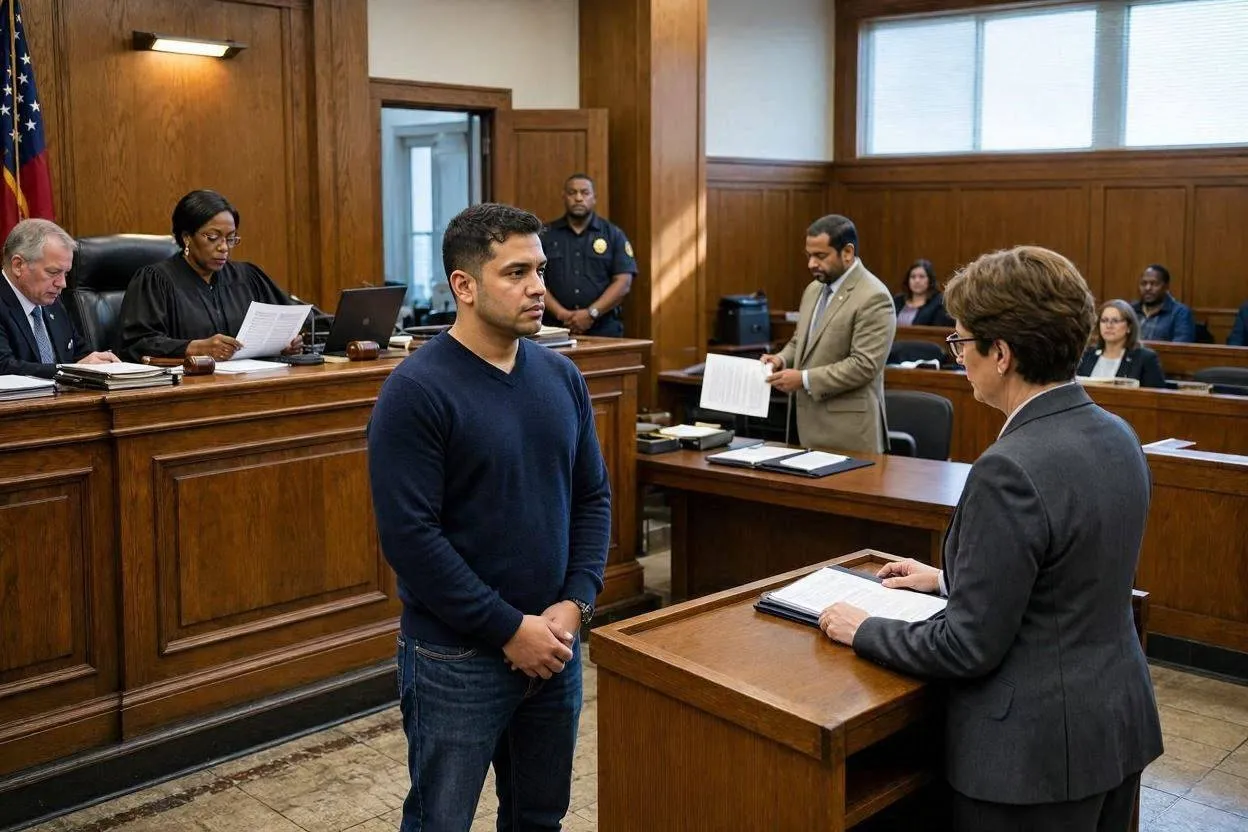
A judge, a prosecutor, and a defense attorney are required at every arraignment, along with the defendant and a court reporter. State courts sometimes relax attendance rules for the defendant depending on jurisdiction. Federal courts almost always require the defendant to be physically present for felony arraignments.
The defense attorney’s role in securing legal representation starts well before the hearing itself. A private attorney or a court-appointed public defender reviews the criminal complaint, discusses the plea with the defendant, and prepares arguments for release. Defendants without an attorney can represent themselves, though courts strongly discourage self-representation given what’s at stake in the opening minutes of a criminal case.
Family members and friends can usually sit in the courtroom gallery. They don’t participate in the judicial proceeding itself.
What Happens Step by Step During an Arraignment?
An arraignment moves through three core stages: the charges get read, the defendant enters a plea, and the judge rules on bail or release. The entire hearing often lasts just a few minutes, especially in high-volume urban courts handling dozens of cases on a single docket.
The Charges Are Read
The prosecutor presents the judge with a criminal complaint stating the specific charge or charges against the defendant. This document gets built from police evidence and the defendant’s criminal history. The charges read aloud in court can differ from what the defendant expected walking in.
For felony cases, the prosecutor doesn’t need to prove guilt at this point, only that formal charges exist under statute. That threshold gets tested later, through a grand jury or preliminary hearing.
The Defendant Enters a Plea
A defendant must enter a plea of guilty or not guilty at arraignment, unless the charge is a felony without a misdemeanor offer, in which case no plea gets taken yet. Some jurisdictions also permit a peremptory plea, which tells the court why the case can’t proceed to trial at all.
Misdemeanor defendants sometimes plead guilty right there and receive sentencing on the spot. Felony defendants rarely plead at arraignment. Instead, the case gets adjourned pending grand jury action. A defendant facing a petit larceny or disorderly conduct charge might resolve the entire matter in a single appearance.
The Judge Decides on Bail
The judge sets bail, releases the defendant on recognizance, or orders the defendant held without bail. The prosecutor argues for detention or a high bail amount if the defendant poses a flight risk or a danger to the community. Defense counsel argues the opposite, often citing ties to the area, steady employment, or a clean record.
What’s the Difference Between a Felony and a Misdemeanor Arraignment?
Misdemeanor arraignments often resolve with an immediate plea, while felony arraignments almost always get adjourned pending grand jury review. A misdemeanor carries a maximum sentence of one year or less. Defendants charged with one can plead guilty at arraignment and receive sentencing that same day.
Felonies work differently. Court dockets separate these two case types by statute, since felony and misdemeanor charges follow different arraignment calendars from this point forward. Cases in New York move to a court part known as Part F after arraignment, where they stay until a grand jury votes on an indictment. Once an indictment comes down, the case transfers to a Supreme Court arraignment part for a second, formal reading of charges. This two-stage structure means a felony defendant may technically get arraigned twice before the case reaches trial.
Some felony defendants receive a misdemeanor plea offer at the first arraignment, which lets the case end early without grand jury involvement.
What Determines Whether a Defendant Gets Bail?
A judge sets bail based on flight risk, community ties, criminal history, and the severity of the charge. Federal courts apply similar criteria under statute: how long the defendant has lived in the area, whether family lives nearby, prior convictions, and any history of threatening witnesses.
Community danger factors into the decision too. A defendant with deep roots in the area — a mortgage, a job, children in local schools — presents a lower flight risk than someone with no fixed address. Judges weigh these factors against the severity of the charge, since even a well-rooted defendant might get held without bail on a violent felony.
Bail amounts vary widely, from a few hundred dollars on a minor misdemeanor to tens of thousands of dollars on a serious felony.
What Happens If a Defendant Can’t Post Bail?
A defendant who can’t post bail stays in custody until the case resolves or a later court date reduces the amount. In federal cases, that custody falls under the U.S. Marshals Service. In New York City, defendants held on bail typically go to Rikers Island pending further proceedings.
Getting bail reviewed later in the case is possible, but courts presume the original amount was correct under existing case law. A defendant challenging that number faces an uphill argument in front of whichever judge hears the motion.
Waiting periods add up fast. A case that takes a year to reach trial means a year in custody for a defendant who can’t pay, a consequence that lands hardest on defendants without financial resources regardless of the strength of their case.
What Is a Bench Warrant, and What Happens If a Defendant Misses Court?
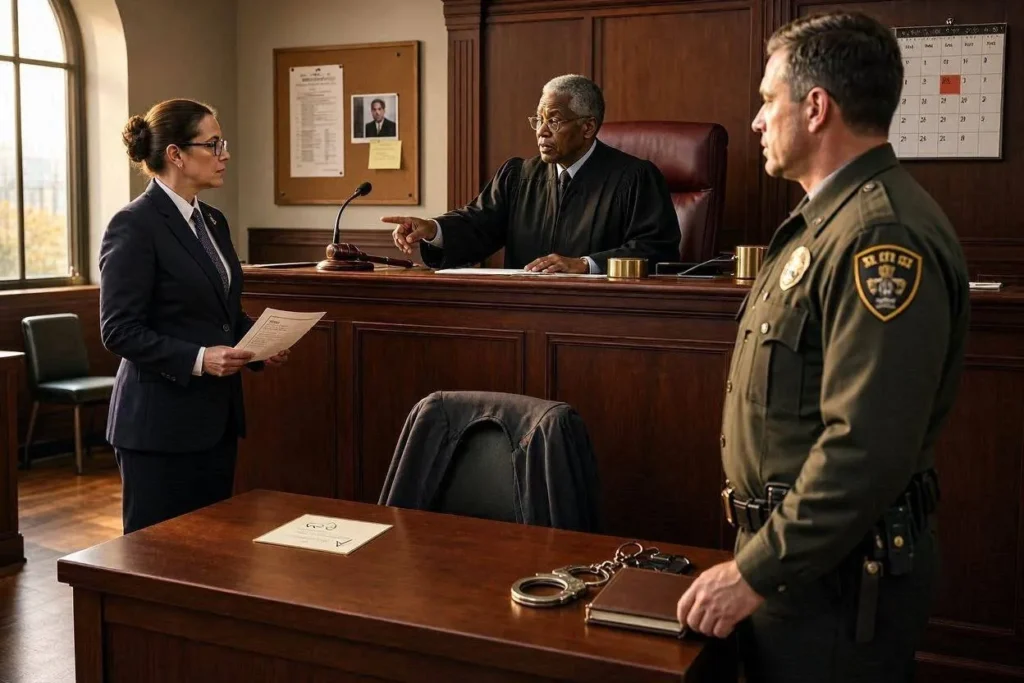
A judge issues a bench warrant when a defendant fails to appear for a scheduled court date, whether or not the defendant posted bail. Police won’t necessarily launch a search, but any contact with law enforcement triggers immediate arrest under an active warrant. A routine traffic stop is enough.
Missing court carries financial consequences too. Bail already posted gets forfeited to the court. A defendant who fails to appear within 30 days can also face a separate criminal charge of bail jumping, layered on top of the original charge.
A bench warrant becomes part of a defendant’s permanent record even if the underlying charge later gets dismissed or results in an acquittal. Few defendants realize that until it’s too late.
What Is a Waiver of Arraignment?
A waiver of arraignment lets a defendant skip the formal court hearing while still entering a not-guilty plea on the record. Three conditions typically need to be met: the defendant was charged by indictment or misdemeanor information, both the defendant and defense counsel signed a written waiver confirming receipt of the charging document, and the court accepted that waiver.
Waiving arraignment doesn’t remove the case from the docket. It moves forward on the same schedule as if the defendant had appeared in person, minus the formal reading of charges. Defense attorneys sometimes recommend this route when a client lives far from the courthouse, or when the appearance itself offers no strategic advantage under the circumstances.
How Is a Federal Arraignment Different From a State Arraignment?
A federal arraignment takes place before a magistrate judge and almost always requires the defendant’s physical presence, unlike some state proceedings that allow flexibility. The purpose mirrors a state arraignment: informing the defendant of the Sixth Amendment right to know the charges, addressing legal representation, and deciding pretrial release.
One key distinction sets federal court apart: federal arraignments happen after probable cause has already been established, so they function differently from a preliminary hearing, where a judge determines whether enough evidence exists to proceed. State systems sometimes combine these steps. Federal jurisdiction keeps them separate.
Federal magistrates apply case law and statutory bail standards under the Bail Reform Act, giving federal proceedings a more uniform procedural structure than many state courts.
What Is a Desk Appearance Ticket?
A desk appearance ticket (DAT) is a written notice ordering a defendant to appear in court on a future date instead of being held for immediate arraignment. Police issue DATs for lower-level, non-violent offenses when the defendant has verifiable identification and no outstanding warrants.
A defendant who receives a DAT avoids a night in custody. The underlying charge and eventual arraignment still proceed on the same legal track as an in-custody case. Skipping the scheduled DAT court date triggers the same bench warrant consequences as missing any other required appearance.
Can an Arraignment Happen by Video?
Yes, many jurisdictions now permit virtual arraignments conducted by video link between the courthouse and a detention facility or remote location. This practice expanded significantly after 2020 and has remained standard in many courts through 2026 for lower-level offenses and certain bail hearings.
Video arraignments still require the same participants: judge, prosecutor, defense attorney. The defendant retains identical rights to counsel and to hear the charges clearly. Some courts limit video appearances to arraignments only, requiring in-person attendance for later proceedings like trial or sentencing.
What Happens After the Arraignment?
What happens after arraignment depends entirely on the plea entered and the severity of the charge. A guilty plea on a misdemeanor often ends with sentencing that same day. A not-guilty plea sends the case toward pretrial motions, discovery, and eventually trial if no plea agreement gets reached first.
Felony cases follow a longer path through the criminal justice system. Prosecutors present evidence to a grand jury, which decides whether enough evidence exists to indict. An indictment moves the case to a formal Supreme Court arraignment, followed by additional motions and hearings before trial.
Discovery plays a major role in this window. The prosecution must turn over evidence within legally mandated timeframes: police reports, witness statements, physical evidence. That material gives defense counsel what’s needed to negotiate a plea or prepare for trial. Pretrial motions filed in the following weeks shape how the case moves toward final adjudication.
Does an Arraignment Plea Affect Immigration Status?
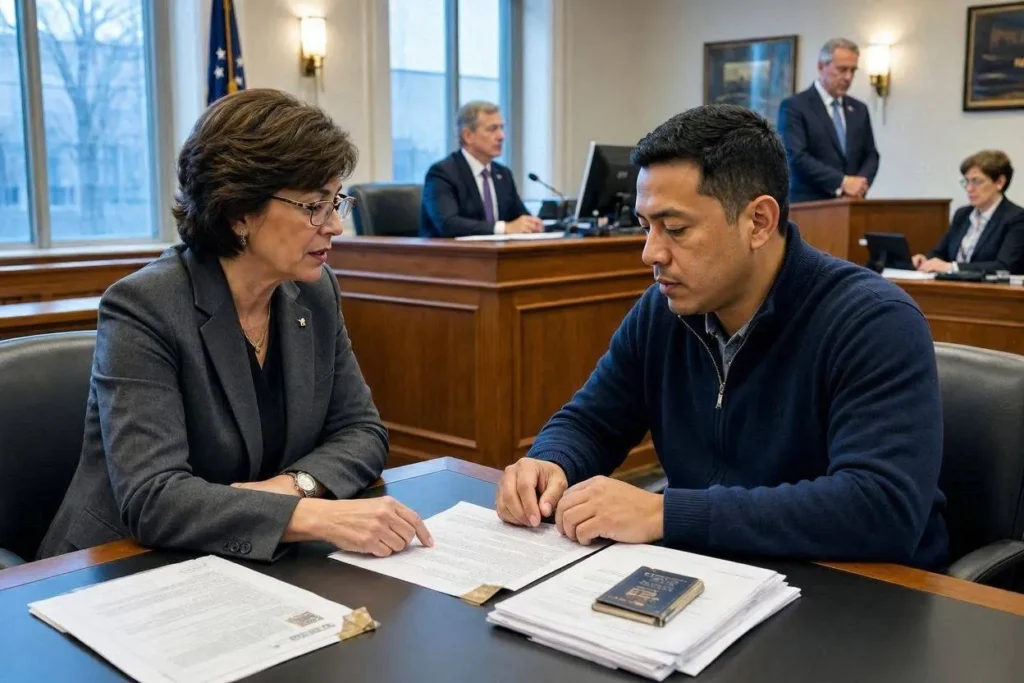
Yes, a guilty plea entered at arraignment can trigger immigration consequences for non-citizen defendants, including deportation proceedings in certain cases. Certain convictions, even for relatively minor offenses, count as deportable crimes or crimes involving moral turpitude under federal immigration law.
This is one reason defense attorneys push back against fast guilty pleas at arraignment for clients who aren’t U.S. citizens. A plea that resolves a criminal case quickly can create immigration problems that outlast the original charge by years. Anyone facing arraignment who isn’t a citizen should raise immigration status with defense counsel before entering any plea.
Why Does Having an Attorney at Arraignment Matter?
Legal counsel at arraignment can directly affect bail amount, plea strategy, and how the case proceeds through the criminal justice system from that point forward. Without an attorney, a defendant faces a prosecutor experienced in exactly this kind of negotiation, alone, in the first few minutes of a case that will shape months or years of legal proceedings.
Courts appoint a lawyer for free if a defendant can’t afford one. That right doesn’t disappear if a defendant wants to hire private counsel later. A defendant can request a new lawyer or retain one at any point in the case, even after arraignment concludes.
Prosecutors sometimes drop weak cases before or at arraignment when defense counsel identifies evidentiary problems early. A defendant who shows up without a lawyer loses that opportunity entirely, since no one is there to make the argument.
Conclusion
An arraignment sets the direction for everything that follows in a criminal case: the plea entered, the bail amount, and whether a defendant spends the coming months in custody or at home. The hearing itself takes minutes, but its consequences reach into sentencing, immigration status, and a defendant’s permanent record within the criminal justice system. Anyone facing one benefits from understanding these mechanics before stepping into the courtroom, not after.
FAQs

Amanda Brooks
Amanda Brooks leads JusticeInTown’s legal, justice, and community advocacy content division. She holds a background in legal research and public policy and specializes in topics related to civil rights, access to justice, legal awareness, and community issues. With years of experience researching legal and social justice topics, Amanda brings a careful, research-driven approach to complex legal information and public-interest issues. She is the primary author of JusticeInTown’s legal guides, justice-related resources, and community-focused content, helping readers better understand their rights, legal options, and the issues affecting their communities.
Related Posts