
Child Support Calculator: How States Calculate Payments
A child support calculator estimates the dollar amount one parent owes another based on state guidelines, income, and custody time. Every state runs its own formula, so the number a calculator spits out is an estimate, not a court order. A judge finalizes the actual figure using the same guideline math, plus whatever adjustments apply to the specific case.
Most people search for this tool right after a separation, divorce, or custody filing. They want a number before the first court date, not a legal lecture. That’s the point of this guide: a working explanation of the math, followed by the variables that push the number up or down.
Three formulas exist across the United States, and a parent in Texas will get a different answer than a parent in Massachusetts from the exact same income and custody numbers. The underlying model just isn’t the same.
How Do States Calculate Child Support
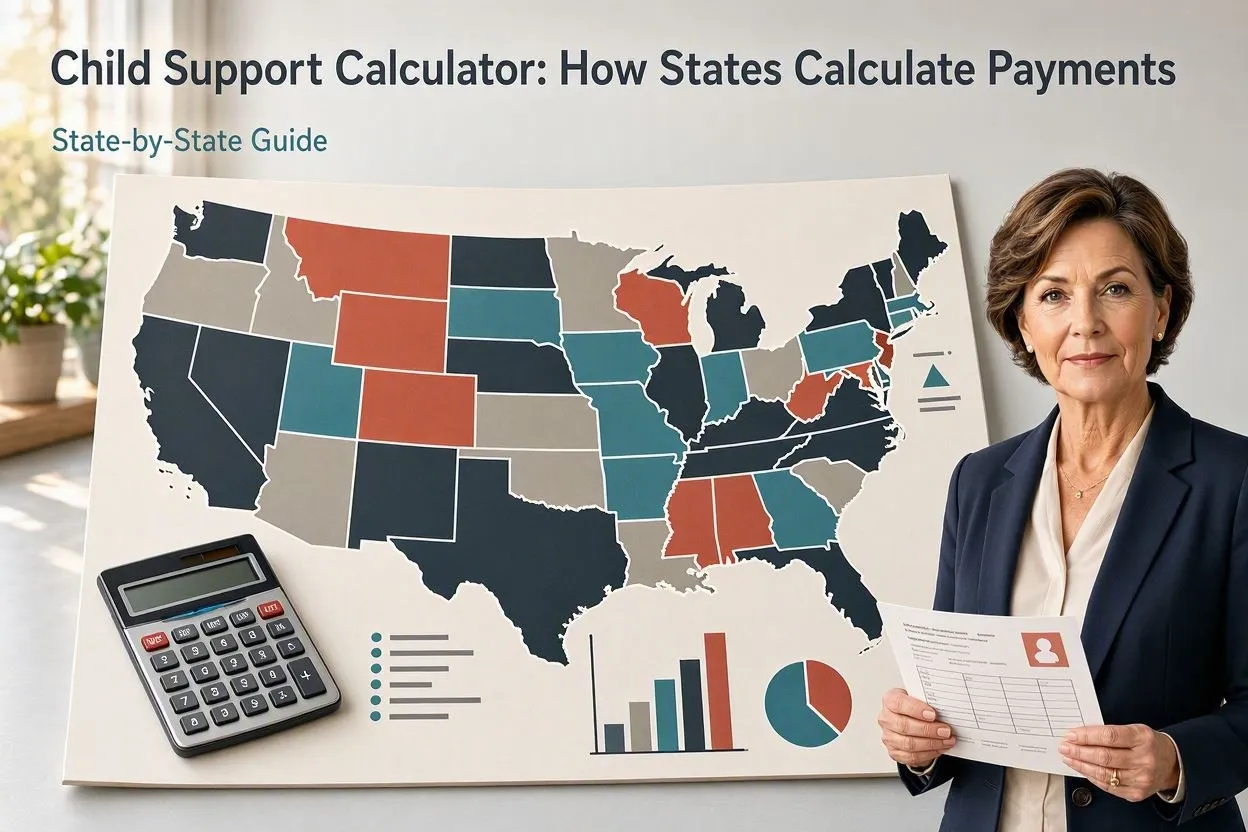
States use one of three guideline models: the Income Shares Model, the Percentage of Income Model, or the Melson Formula.
Income Shares Model combines both parents’ incomes, estimates what the child would have received if the household had stayed intact, and then splits that amount proportionally. 41 states use it.
Percentage of Income Model applies a flat or sliding percentage to the paying parent’s income alone. Texas and Wisconsin use this method.
The Melson Formula is a variation on Income Shares that sets aside a minimum self-support amount for each parent before calculating the child’s share. Delaware, Hawaii, and Montana apply this version.
Plug numbers into a calculator built around the wrong model, and the result can be off by hundreds of dollars a month. Confirm which model a state uses before you trust anything an online tool tells you.
What Counts as Income in Child Support Calculations
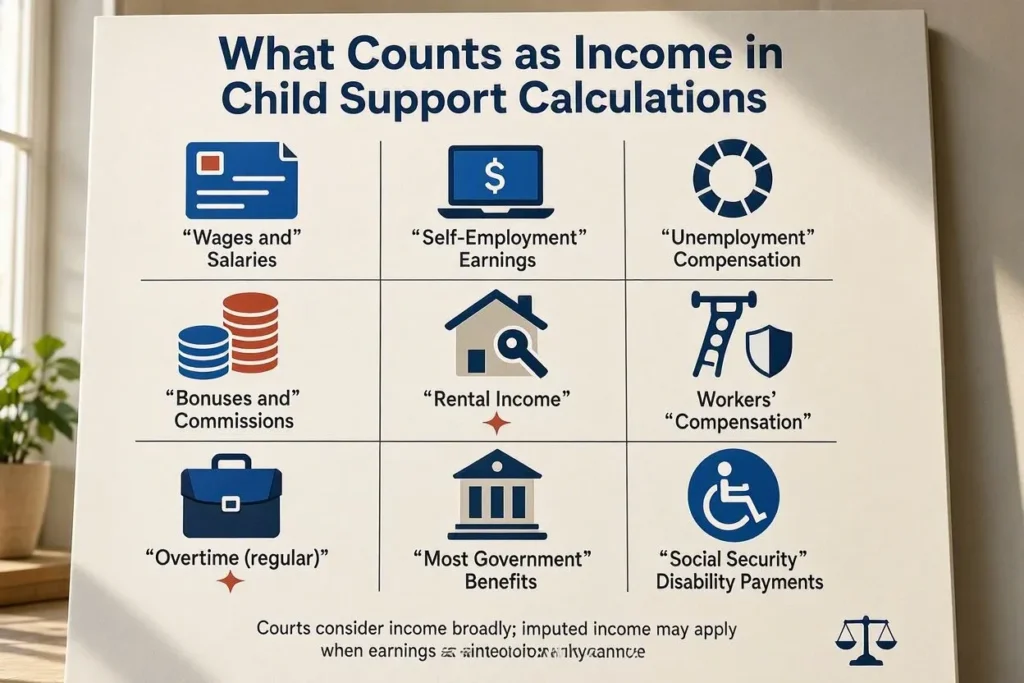
Gross income for child support purposes includes wages, self-employment earnings, bonuses, commissions, and most government benefits. Courts don’t limit “income” to what shows up on a W-2.
Rental income counts. So does unemployment compensation, workers’ compensation, and Social Security disability payments. Overtime counts too, as long as it’s regular rather than a one-time thing.
Imputed income enters the picture if a parent is voluntarily unemployed or working below their earning capacity. A judge can assign an income figure based on the parent’s education, work history, and local job market, then run the guideline formula against that number instead of actual earnings. A parent who quit a $70,000 job to dodge a higher payment won’t see the calculation drop to zero. The court just assigns the old salary back into the formula.
Self-employed parents get more scrutiny. Business deductions that lower taxable income for the IRS don’t automatically lower income for child support math. A vehicle write-off or home office deduction often gets added back in before the guideline percentage applies.
How Does Parenting Time Change the Payment Amount
More overnight stays with the paying parent lower the monthly payment under most state guidelines. The logic is simple: a parent covering food, housing, and daily costs during overnight time is already contributing directly, so the cash transfer shrinks.
States set the threshold differently. Some start reducing payments at 73 overnight stays a year. Others won’t budge until the split is close to 50/50. A parent with 40% of overnights might see no adjustment at all in one state, and a meaningful reduction for the same 40% next door.
Shared custody doesn’t erase the payment, either. Even a 50/50 schedule usually still results in a payment from the higher earner to the lower earner, since the formula accounts for the income gap between both households, not just the time split.
What Happens When a Parent Doesn’t Pay
Unpaid child support triggers automatic enforcement in every state. Each one runs a Child Support Enforcement (CSE) agency with authority to collect past-due amounts without a new court hearing.
Enforcement tools include wage garnishment, tax refund interception, and license suspension. Driver’s, professional, and recreational licences can all be pulled in most states. Passport denial kicks in once arrears cross $2,500, and credit bureaus get notified of the delinquency, which dings a credit score the same way a defaulted loan would.
Contempt of court is the harshest tool available. A judge can order jail time for a parent who has the ability to pay and simply refuses. Incarceration is rare in practice and usually only shows up after repeated violations.
How to Modify an Existing Child Support Order

A parent files a modification petition with the same court that issued the original order, then has to show a substantial change in circumstances. Losing a job, a significant pay increase, or a shift in the custody schedule all qualify in most states.
The bar for “substantial” varies. Some states require a 10% shift in the calculated amount; others set a fixed dollar threshold. You can’t modify an order just because the number feels unfair a few years later. The change has to be documented and tied to one of the qualifying events.
And modification isn’t automatic even with a strong case. A hearing date gets set, both parents submit updated financial disclosures, and the court recalculates using current numbers under the same formula that produced the original order.
Using an Online Calculator the Right Way
An online child support calculator gives you a starting estimate, not a final number. Treat the output as a planning figure for budgeting or mediation prep, then confirm the actual obligation through a state’s official guideline worksheet or a licensed attorney.
Bring three things to any consultation: last year’s tax return, three recent pay stubs, and a proposed custody calendar. That’s enough for an attorney or a court-approved calculator to run the real formula instead of a rough guess.
FAQs

Amanda Brooks
Amanda Brooks leads legal, justice, and community advocacy content at JusticeInTown, drawing on a background in legal research and public policy. She specializes in civil rights, access to justice, and legal awareness, bringing a careful, research-driven approach to complex legal and public-interest topics. Her guides help readers better understand their rights, legal options, and the issues affecting their communities.
Related Posts