Easement Rights Explained: Types, Rules, and Your Options
An easement grants one party the legal right to use part of another person’s land for a specific purpose, without transferring ownership. A neighbor’s driveway crossing your backyard, a utility company’s buried gas line, a footpath to a shared lake access point: all of them rely on this same legal arrangement. Easement rights shape what an owner can build, block, or charge for on their own property, so it pays to understand them before a dispute ever starts.
This guide breaks down the main easement types, how each one gets created and ended, and the steps to take if a disagreement lands on your property line. The information below reflects general U.S. property law principles. Easement rules vary by state, so a licensed real estate attorney should review the specific facts of any dispute or transaction.
What Is an Easement?
An easement is a non-possessory legal interest that lets one party use a defined portion of another party’s land for a stated purpose. The landowner keeps title to the property. The easement holder only gains the right to use it in the way the easement describes, whether that’s for access, utility lines, drainage, or something similar.
Three features separate an easement from full ownership. The right is limited to a specific use rather than general control of the land. The underlying title stays with the property owner at all times. And most easements attach to the land itself, meaning the right survives a sale and binds the next owner.
Easements differ from licenses in one key respect: a license grants permission to use land temporarily and can be revoked at will, while an easement creates a durable property interest that neither party can cancel without following a recognized legal process. A homeowner who lets a neighbor park in the driveway for a season has granted a license. A homeowner who signs a recorded agreement letting that same neighbor cross the property permanently to reach a garage has granted an easement.
Easements also differ by the direction of the restriction they impose. An affirmative easement lets the holder do something on the servient estate: cross it, run a pipeline under it, draw water from it. A negative easement restricts what the servient estate owner can do on their own land, such as blocking a neighbor’s light, air, or scenic view. Conservation easements, common across farmland and forested parcels, fall into this negative category. A landowner agrees never to develop the property, often in exchange for a tax benefit, and a land trust or government agency holds the right to enforce that restriction.
Dominant Estate and Servient Estate: The Two Sides of Every Easement
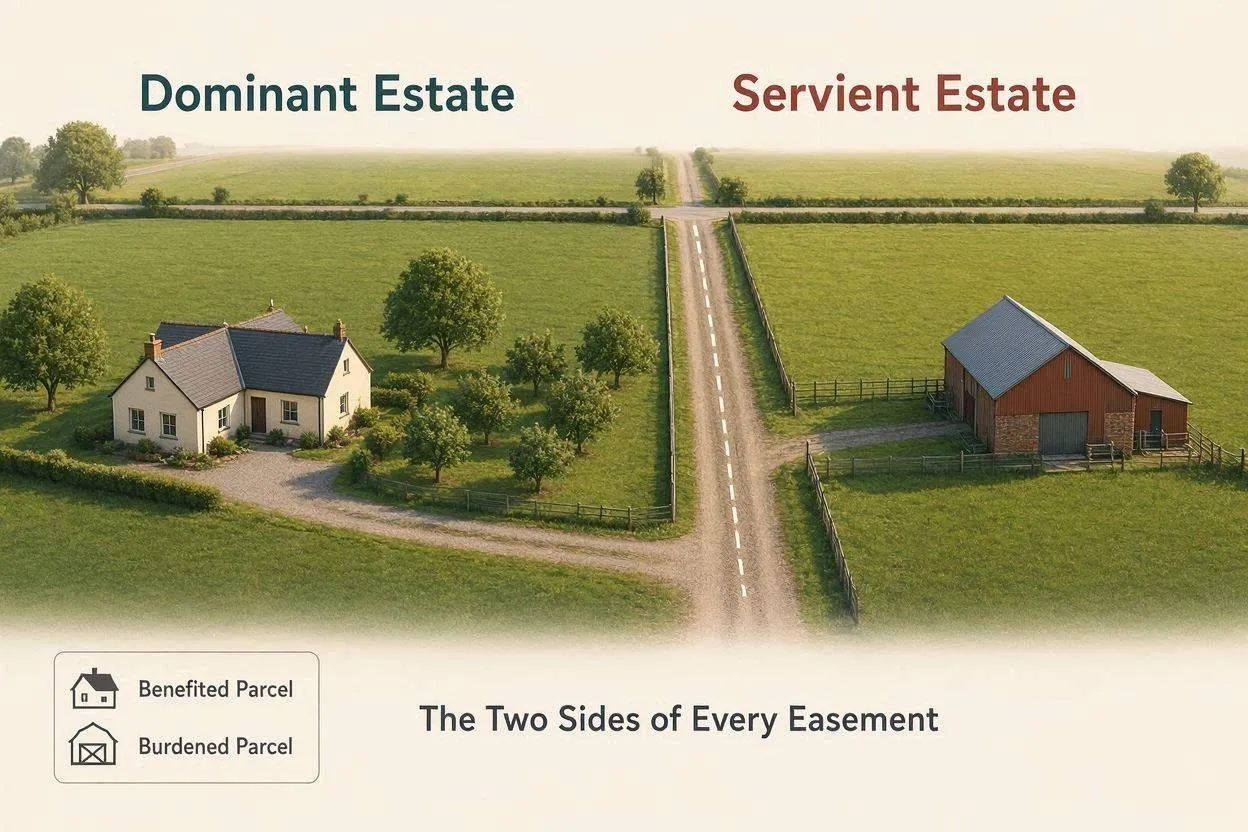
The dominant estate is the property that benefits from an easement, and the servient estate is the property that carries the burden. Attorneys and court opinions use these two terms in nearly every easement case, so it helps to get comfortable with them early.
Picture two neighboring lots. Lot A sits behind Lot B and has no direct road access. Lot A’s owner holds an easement to drive across a strip of Lot B to reach the street. Lot A is the dominant estate because it receives the benefit; Lot B is the servient estate because it carries the burden. Courts in most states presume an easement is appurtenant (tied to the dominant estate) unless the recorded document says otherwise.
A single parcel can hold both roles at once, just for different easements. A homeowner’s lot might serve as the dominant estate for a shared driveway agreement with one neighbor, while the same lot serves as the servient estate for a utility company’s buried line on the opposite side. Reviewing a property’s full easement history, rather than a single recorded document, gives a far more accurate picture of everything attached to the land.
Six Types of Easements Property Owners Encounter
Property law recognizes several easement categories, and each one carries different rules for creation, transfer, and duration.
Easement Appurtenant
An easement appurtenant attaches to the land itself and transfers automatically when either property sells. This is the most common easement type in American real estate. Shared driveways, private access roads, and drainage rights between adjoining lots typically take this form. The right runs with the deed, so a new owner of the dominant estate inherits the benefit, and a new owner of the servient estate inherits the burden.
Two features distinguish this category from every other easement type. The two parcels sit adjacent to or near one another, since the whole arrangement exists to benefit a specific piece of neighboring land rather than a person. And neither owner can sell or separate the easement from the land it attaches to; a dominant estate owner can’t transfer the right-of-way to a stranger’s unrelated property across town.
Easement in Gross
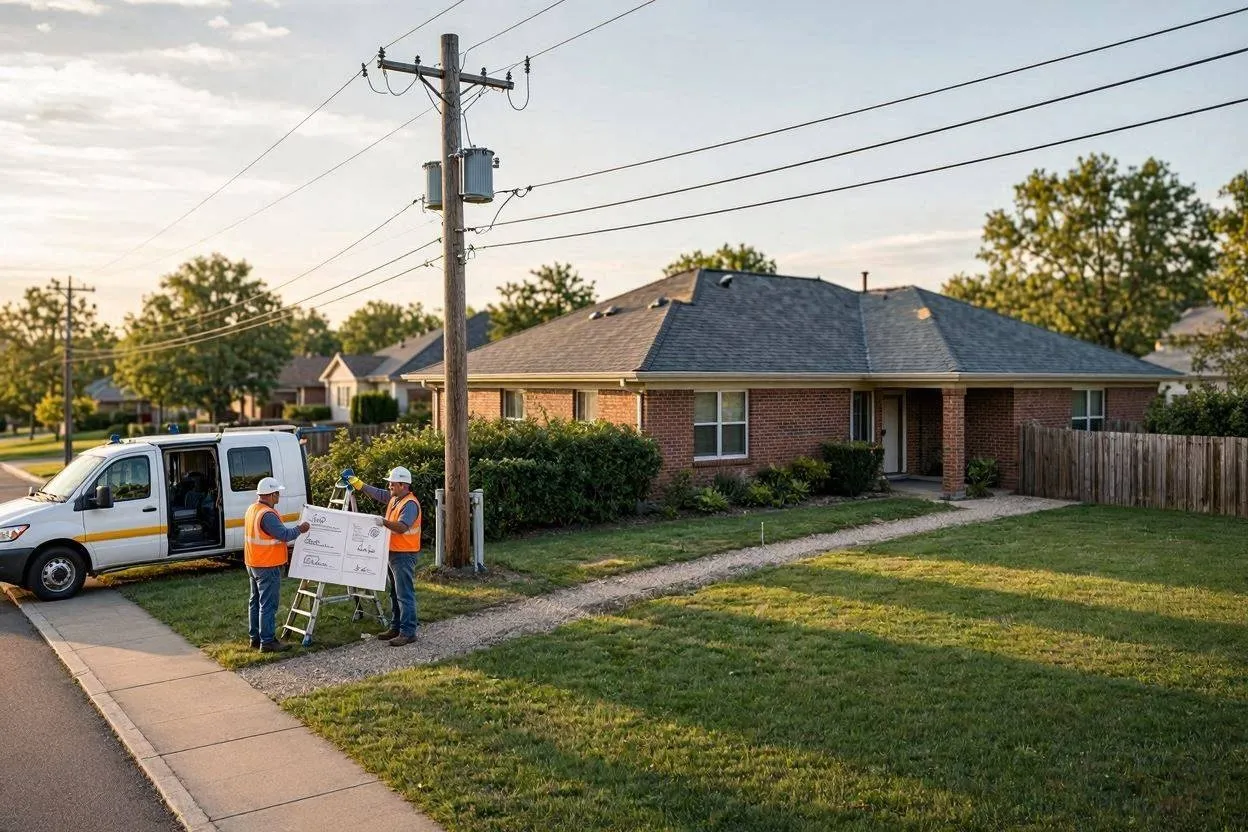
An easement in gross benefits a specific person or company rather than a neighboring property, and it generally doesn’t transfer with a land sale. Utility companies hold the clearest example of this category. A power company’s right to run transmission lines across a parcel exists independent of who owns the land, and it typically can’t be sold or assigned to another party without the original grantor’s consent, unless the easement was created for a commercial purpose.
Commercial easements in gross behave differently than personal ones. A pipeline company’s easement, a cell tower lease easement, and a railroad right-of-way all count as commercial interests, and courts generally allow these to transfer or assign freely, since the original agreement contemplated ongoing corporate use rather than one individual’s personal right. A personal easement in gross, say the right to fish in a specific pond, typically ends when the individual holder dies, unless the recorded document states otherwise.
Express Easement
An express easement is created through a written agreement or deed that both property owners sign and record. This is the most straightforward and best-documented easement type, since the terms (location, scope, duration) appear right in the recorded instrument. Courts turn to the written language first when a dispute arises over an express easement’s scope.
An express easement can arise through a grant, where the servient estate owner gives the right to another party, or through a reservation, where a seller carves out an easement for their own remaining land before transferring the rest of a tract. Both versions require the same formalities as a deed: a written instrument, proper signatures, and recording at the county level to bind future buyers.
Implied Easement
An implied easement arises when a property is divided and the circumstances show both parties intended a prior use to continue. Three conditions typically establish this type. One owner must have transferred part of a single tract to another party. The original use must have been apparent and ongoing before the split. And the easement must be reasonably necessary for using the land as intended after the division.
A common fact pattern involves a shared well or septic line installed before a large lot was subdivided into two smaller parcels. Neither new deed mentions the buried pipe, yet both owners depended on it before the split, and a court will typically recognize an implied easement to keep the arrangement working rather than force one owner to install a duplicate system.
Easement by Necessity
An easement by necessity is created when a landlocked parcel has no other legal way to reach a public road or utility connection. If a property owner sells a portion of a tract and leaves the remaining parcel without road access, courts will typically imply an access easement across the retained land, even without a written agreement, because the law disfavors landlocked property.
This easement type differs from an implied easement by existing use in one respect: necessity easements don’t require any prior physical use of the land before the split. A court only needs proof that the original tract was under common ownership and that the division left one parcel without legal access. The easement automatically follows the most direct reasonable route between the landlocked parcel and the public road.
Prescriptive Easement
A prescriptive easement forms when someone uses another person’s land openly and continuously for a set statutory period, without the owner’s permission. Most states require open, notorious, continuous, and adverse use for a period ranging from 5 to 20 years, commonly 15. A footpath used year-round for over a decade without the landowner’s objection is a typical fact pattern that supports this claim.
Four elements distinguish a valid prescriptive claim from ordinary trespass. The use must be visible enough that a landowner exercising reasonable attention would notice it. It must occur without the landowner’s permission, since permitted use, even for decades, never ripens into a legal right. It must continue without significant interruption for the full statutory period. And it doesn’t need to be exclusive to the claimant, unlike adverse possession, which requires the claimant to occupy the land alone.
How an Easement Gets Created
Four methods account for nearly every easement on record: express grant, implication, necessity, and prescription. Express grants require a signed and recorded deed or agreement, and this remains the strongest form of evidence in a later dispute. Implied easements and easements by necessity arise from the circumstances surrounding a property division, so no separate document is required at the time of the split. Prescriptive easements form through years of open use, which means the claimant must later prove the required conduct in court if the landowner disputes the claim.
A property’s chain of title, survey records, and county recorder filings typically reveal express easements. Implied and prescriptive easements are harder to spot from paperwork alone, since neither one depends on a recorded instrument.
Rights and Duties of Easement Holders and Landowners
Easement holders may use the land only for the purpose stated or reasonably implied by the easement’s origin, and landowners may not block that access. A utility easement, for example, permits equipment maintenance and repair, not general foot traffic or storage. An easement holder who expands the use beyond the original scope, turning a footpath easement into a driveway for heavy trucks, risks a legal challenge from the servient estate owner.
Maintenance responsibility depends on the agreement’s language. Many recorded easements assign upkeep costs to the party who benefits from the access, though some split costs between both owners. Silence in the deed on this point sends the question to state common law, which varies.
Servient estate owners retain every right that doesn’t conflict with the easement’s purpose. A property owner burdened by a utility easement along the rear property line can still landscape, fence, or build on that strip of land in most cases, provided the structure doesn’t interfere with the utility company’s access or equipment. Building directly over a buried gas line or blocking a shared driveway’s full width typically crosses into a dispute, since it defeats the purpose the easement was created to serve.
Easement holders carry their own obligations beyond staying within scope. Many states require the holder to restore any surface disturbance, trenching for a utility line, for example, to a condition reasonably close to its original state. An easement holder who damages the servient estate beyond what the stated use requires can face liability for the repair cost, separate from any dispute over the easement’s scope.
Due Diligence Before Buying a Property With an Easement
Buyers evaluating a property should request three documents before closing: the recorded deed history, a current title report, and a boundary or ALTA survey showing every easement’s exact location. A title company typically lists recorded easements as exceptions on the title insurance policy, and a buyer should review each exception line by line rather than treat the list as routine paperwork.
Three questions guide this review. Does the easement’s stated purpose match its current physical use on the ground? Does its location conflict with where the buyer plans to build a garage, pool, or addition? Does the recorded document assign maintenance costs, and if not, has the seller disclosed how those costs have historically been handled? A buyer who skips this review risks discovering, after closing, that a planned expansion sits directly on a neighbor’s right-of-way.
Eight Ways to Terminate an Easement
An easement can end through any of the following methods, and several apply regardless of how the easement was originally created.
- Expiration: the easement includes a stated end date or triggering event, and that date or event has passed.
- Merger: the same owner acquires both the dominant and servient estates, eliminating the need for the easement.
- Release: the easement holder signs a written document giving up the right, often in exchange for payment.
- Abandonment: the holder shows clear intent to give up the right through affirmative conduct, not through non-use alone.
- End of necessity: an easement by necessity terminates once the landlocked parcel gains another legal route to a public road.
- Prescription: the servient estate owner blocks the easement openly for the state’s statutory period, and the holder takes no action to stop it.
- Condemnation: a government agency exercises eminent domain and eliminates the easement as part of a public project.
- Destruction of the servient estate: a natural disaster or structural loss removes the physical basis for the easement’s use.
A property owner seeking termination should confirm which method applies to the specific easement type before taking any action, since merger and release require different documentation than abandonment or prescription.
How to Find Out If an Easement Exists on Your Property
A title search at the county recorder’s office reveals most recorded express easements tied to a property. Title companies routinely uncover these during a real estate transaction and list them as exceptions on the title insurance policy. A boundary or ALTA survey (a land survey standard set by the American Land Title Association) goes further, mapping the exact location and dimensions of any easement area on the ground rather than just its existence on paper.
Implied, prescriptive, and necessity-based easements rarely appear in the public record, since none of the three requires a written instrument at formation. A property owner concerned about these types should look for physical evidence instead: worn footpaths, shared driveways, utility poles, drainage channels crossing the parcel, then confirm the history with neighbors or a local attorney.
What to Do When an Easement Dispute Arises
Start by pulling the recorded deed and any survey documents for the property, since the written terms govern an express easement’s scope in most cases. Contact the other party directly and describe the specific conduct in dispute, whether that’s blocked access, expanded use, or unpaid maintenance costs, before escalating the matter.
If direct conversation fails to resolve the disagreement, a property owner has three main paths forward: mediation through a neutral third party, a formal demand letter drafted by an attorney, or a quiet title action filed in state court to establish or extinguish the easement’s legal status. Court proceedings resolve the dispute permanently but take longer and cost more than mediation, so most attorneys recommend attempting negotiation first.
Common disputes fall into a small number of recurring categories. Scope disputes arise when one party expands the use beyond the original purpose, such as converting a pedestrian path into a vehicle route. Maintenance disputes arise when the recorded document assigns no clear cost-sharing arrangement and one owner refuses to contribute to repairs. Blocking disputes arise when a servient estate owner builds a fence, gate, or structure that interferes with the holder’s authorized access. Boundary disputes arise when neither party can agree on the easement’s exact physical location, often because the original description used vague or outdated survey terms.
A new survey resolves boundary disputes in most cases, since a licensed surveyor can plot the easement’s legal description onto the current lot lines and settle any disagreement over its physical footprint. Attorneys typically recommend this step before filing suit, since it usually costs far less than litigation.
Easements and Property Value

An easement can raise or lower a property’s market value depending on its type, location, and burden on the land. A utility easement running along a property’s rear boundary rarely affects value, since it sits outside the buildable area and requires no ongoing interaction from the owner. A shared driveway easement running through the center of a lot can reduce value, since it limits building placement and creates an ongoing relationship with a neighboring owner.
Buyers should request a full title search and survey before closing on any property with a recorded easement, and lenders typically require this step as part of standard underwriting.
Appraisers weigh three factors when an easement affects a valuation: how much usable land the easement removes from development, how visible or intrusive any equipment or structures are on the easement area, and whether the easement grants exclusive use to a third party or allows the owner to continue most normal activities on the burdened strip. A large exclusive-use easement running through a lot’s buildable footprint can reduce appraised value substantially, while a narrow underground utility easement along a rear boundary typically has minimal measurable effect. Sellers disclosing a recorded easement up front, along with its documented history, generally close transactions faster than sellers who leave buyers to discover the burden during a title search.
Conclusion
Easement rights come down to two owners’ competing interests in the same piece of land, and the type of easement in place usually decides who has the upper hand in a dispute. A recorded express easement gives both sides clear, enforceable terms to point to. An implied, prescriptive, or necessity-based easement depends on facts and history instead, which is exactly why early documentation and a title search are worth the effort before either side digs in. Owners who understand these distinctions before a conflict starts hold a stronger position than those who wait until the disagreement reaches a courtroom.
FAQs

Amanda Brooks
Amanda Brooks leads JusticeInTown’s legal, justice, and community advocacy content division. She holds a background in legal research and public policy and specializes in topics related to civil rights, access to justice, legal awareness, and community issues. With years of experience researching legal and social justice topics, Amanda brings a careful, research-driven approach to complex legal information and public-interest issues. She is the primary author of JusticeInTown’s legal guides, justice-related resources, and community-focused content, helping readers better understand their rights, legal options, and the issues affecting their communities.
Related Posts