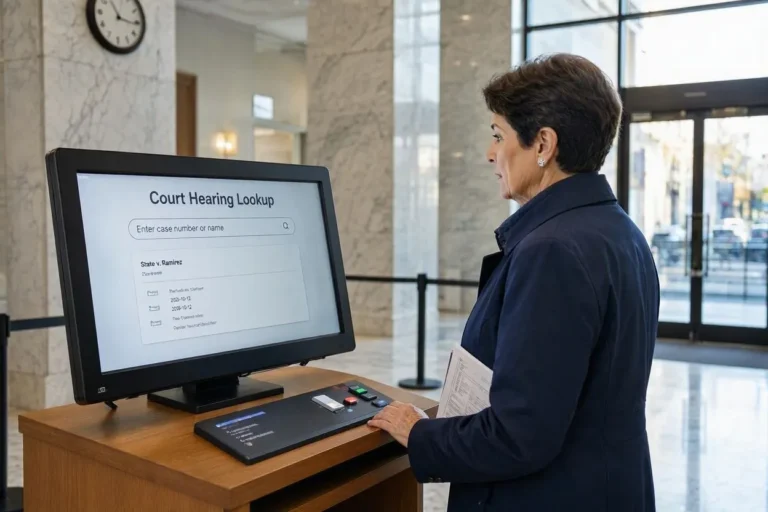

How to Hire a Criminal Attorney: A Step-by-Step Guide (2026)
Hiring the right criminal attorney shapes how your case moves through the system, what it costs you, and whether you walk away with a clean record. This guide covers the timeline for hiring, how to check credentials, what to ask, and how fees actually work, in that order, because each step builds on the last.
Do You Need a Criminal Attorney?

Yes, if police have contacted you about a crime, you’ve been arrested, or you’re facing any charge that carries jail time. A misdemeanor conviction can still cost you a job, a professional license, or custody rights. A felony carries those same risks plus years in prison. Waiting doesn’t make either situation better.
Some cases don’t call for a lawyer. A parking ticket or a minor infraction with no jail time attached rarely justifies attorney fees. Criminal charges are a different animal. The government has usually built its case against you before you’re even arrested, and a prosecutor’s job is to convict you, not to look out for your interests.
When to Hire: The Timeline That Matters
Where you are in the process changes what your search should look like. Four stages matter here, and each one narrows your options a little more.
Before an Arrest
Contact a criminal attorney immediately if police ask to speak with you about an investigation, even informally. Officers often frame these chats as routine, or as a chance to “clear things up.” In reality, anything you admit before an arrest can become the strongest evidence against you later, since none of it is protected the way a formal interrogation is. A lawyer can talk to investigators on your behalf and keep you from answering questions that sound harmless but aren’t.
After Arrest, Before Charges
Federal cases sometimes proceed under a sealed indictment, meaning you won’t even know charges exist until officers show up to arrest you. Prosecutors usually have 48 to 72 hours in these cases to formally charge you or let you go. Hiring counsel during that window lets your attorney negotiate bail, request evidence, and sometimes talk a prosecutor out of filing certain charges at all.
After Charges Are Filed
Once charges exist, your case has a court date, a docket number, and an assigned prosecutor. Hire someone with real experience in that specific charge type. A lawyer who handles theft cases every week brings different skills to the table than one who mostly does divorce work, even at the same firm.
Approaching Trial
Switching attorneys close to trial is risky. Courts often deny last-minute requests to withdraw or substitute counsel, since a new lawyer needs time to review evidence and prepare. If you have doubts about your current attorney, resolve them weeks before the trial date, not days.
Public Defender vs. Private Attorney vs. Self-Representation
Three paths exist once you’re charged, and each one fits a different situation.
Public Defender
A government-paid attorney assigned to people who can’t afford private counsel. Income limits vary by state and county, and courts typically want proof of income, like pay stubs or a benefits statement, before approving one.
Private Attorney
Someone you hire directly and pay out of pocket. Private counsel usually means more time on your case, direct access to the attorney actually handling your file, and more say in strategy.
Self-Representation (Pro Se)
Representing yourself in court. Courts allow it, but judges hold pro se defendants to the same procedural rules as attorneys. Miss a filing deadline and it counts against you whether you knew the rule or not.
Public defenders carry heavy caseloads in most jurisdictions, sometimes over 150 open cases per attorney at once. That workload doesn’t make them less capable. Plenty started as prosecutors or have handled thousands of criminal cases. But it does mean less one-on-one time than you’d get from a private attorney with a lighter docket.
How to Verify a Criminal Attorney’s Credentials
Confirm the Law License
Every state bar association keeps a public directory of licensed attorneys, searchable by name. Check the attorney’s license status before your first call. “Active” and “in good standing” means they can currently practice in that state. “Suspended” or “inactive” is a stop sign, not a formality you can skip.
Check for Board Certification
The American Bar Association doesn’t certify individual specialties nationally, but some state bars offer board certification in criminal law for attorneys who meet minimum case experience, pass a specialty exam, and go through peer review. Fewer than 5% of practicing criminal attorneys in most states hold this. It’s not required to practice, but it does confirm real, documented depth beyond a general license.
Search the Disciplinary Record
State bar websites publish attorney disciplinary histories, including complaints, suspensions, and disbarments. One old, dismissed complaint usually isn’t a dealbreaker. Multiple recent complaints, or any suspension in the past five years, deserves a direct question at your consultation.
7 Questions to Ask Before Hiring
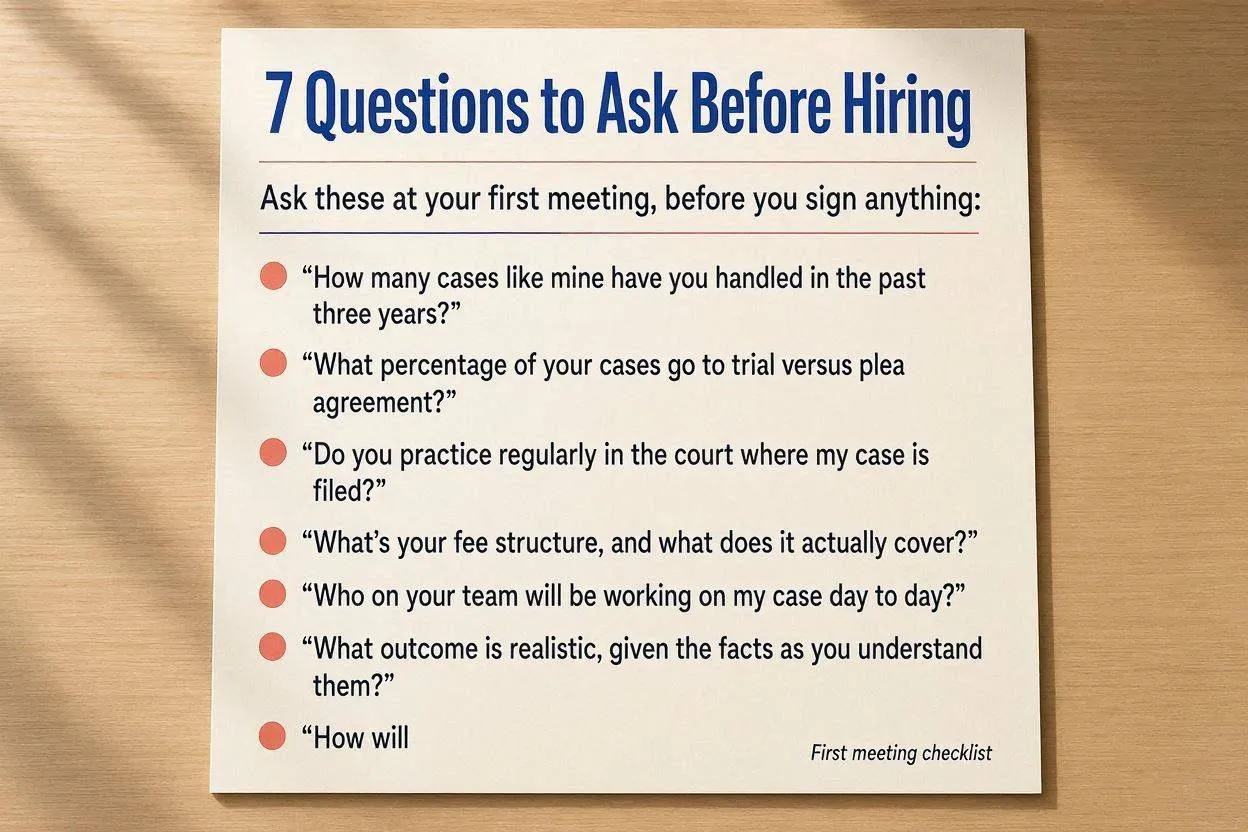
Ask these at your first meeting, before you sign anything:
- How many cases like mine have you handled in the past three years?
- What percentage of your cases go to trial versus plea agreement?
- Do you practice regularly in the court where my case is filed?
- What’s your fee structure, and what does it actually cover?
- Who on your team will be working on my case day to day?
- What outcome is realistic, given the facts as you understand them?
- How will you keep me updated on deadlines and progress?
If an attorney answers question 6 with a guarantee of dismissal or acquittal, that’s overselling. No one can promise a specific outcome before reviewing the evidence, and any attorney worth hiring will tell you that straight.
How Criminal Attorneys Charge
Hourly Fees
Attorneys bill by the hour for cases with an uncertain timeline, like contested trials or ones still under investigation. Hourly rates for criminal defense typically run $150 to $500, depending on experience and local market. A public corruption or federal fraud case in a major city can push that past $700 an hour for specialized counsel.
Flat Fees
Many attorneys charge flat fees for cases with a predictable scope, like a first-offense misdemeanor or an uncontested plea. Misdemeanor flat fees commonly run $1,500 to $5,000. Felony flat fees, when attorneys offer them, often start around $5,000 and can climb well past $25,000 for serious charges. Ask exactly what the flat fee includes. Some cover only the plea stage and bill separately if the case goes to trial.
Retainers vs. Fee Advances
A retainer secures an attorney’s availability and is often non-refundable, regardless of hours worked. A fee advance is money paid upfront that gets credited against actual billed hours, with anything unused returned to you. People use these terms interchangeably in conversation, but they have very different financial consequences. Get it in writing before you sign anything.
5 Red Flags When Hiring
- Guaranteed outcomes. No attorney can promise a dismissal, an acquittal, or a specific sentence before reviewing your file.
- Pressure to sign the same day. A legitimate attorney gives you time to compare options, even in urgent cases.
- No written fee agreement. Verbal promises about cost don’t hold up later. Most states require fee agreements in writing.
- Vague answers about trial experience. An attorney who won’t say how many trials they’ve actually taken to verdict is dodging the question for a reason.
- Unreturned calls before you’ve even hired them. If they’re slow to respond while trying to win your business, expect the same after you sign.
Federal vs. State: Why Jurisdiction Matters
Federal and state courts run on separate rules, separate sentencing guidelines, and separate prosecutors, so the attorney you need depends on which system charged you. Federal cases, like drug trafficking across state lines, fraud investigated by the FBI, or gun charges tied to federal statutes, require an attorney admitted to practice in federal district court. That’s a separate credential from a state law license. State charges, which cover most arrests for theft, assault, and DUI, stay in the county or municipal court where the offense happened.
Ask directly whether an attorney holds federal court admission if your case touches federal charges or a federal investigation. Some state-licensed attorneys never appear in federal court and will tell you so upfront. Others hold the admission but rarely use it.
What to Bring to Your First Consultation
- Any paperwork from police or the court: citations, arrest paperwork, a notice to appear.
- A written timeline of events, in your own words, while it’s still fresh.
- Contact information for any witnesses.
- Your income documentation, if you’re going to ask about a payment plan or public defender eligibility.
- Your list of questions from above.
Bring the facts that hurt your case along with the ones that help it. An attorney who only hears the flattering version of events can’t build an accurate strategy, and surprises during trial prep cost a lot more than an uncomfortable first meeting.
What Happens After You Hire an Attorney
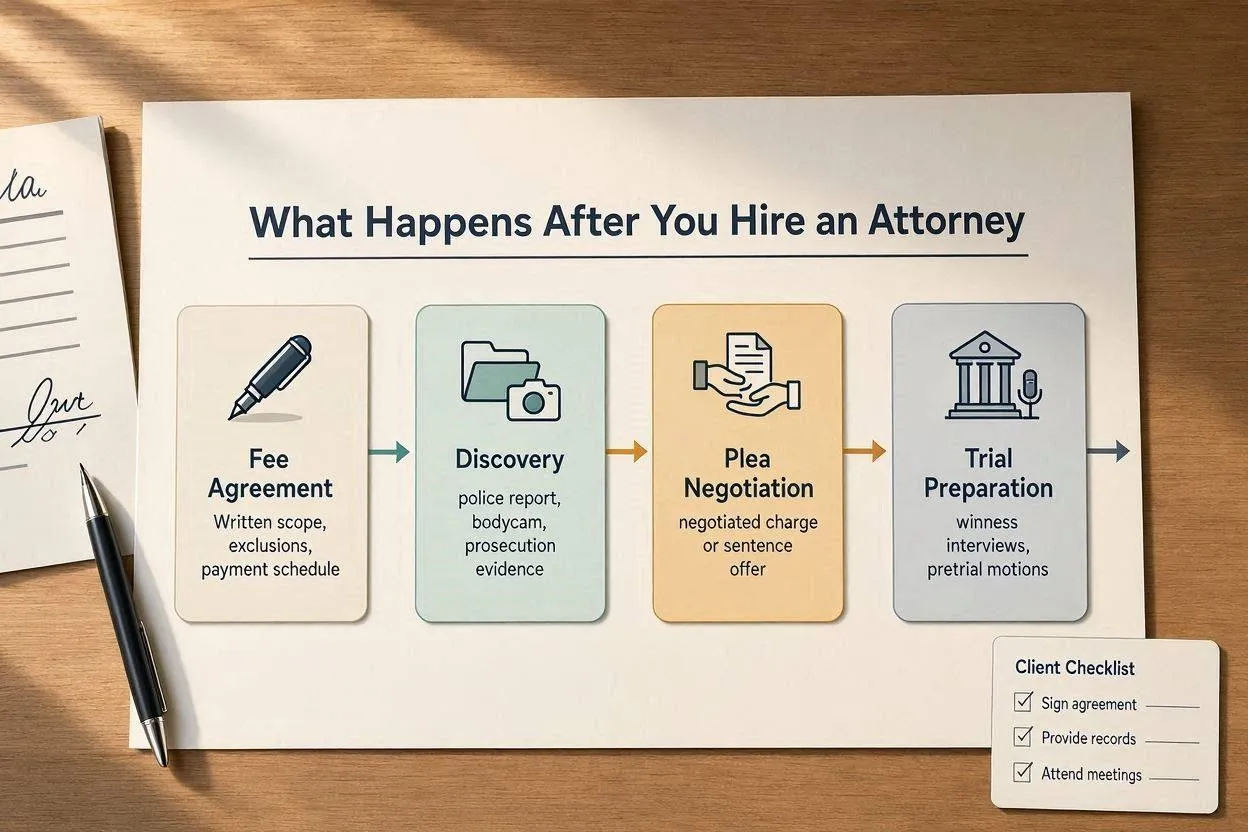
Expect a written fee agreement first, spelling out what’s included, what isn’t, and when payments are due. Your attorney then requests the police report, body camera footage, and whatever other evidence the prosecution is holding, a process called discovery. From there, most cases go one of two ways: negotiation toward a plea, or preparation for trial, which includes witness interviews and pretrial motions to suppress evidence or dismiss charges.
Ask your attorney directly how often you’ll hear from them. Some send you a copy of every filing automatically. Others only call when there’s an actual decision to make. Set that expectation at the first meeting, not three months in.
Conclusion
Hiring a criminal attorney comes down to four checks: confirm what stage you’re in, verify the license and disciplinary record, ask the 7 questions before signing anything, and get the fee structure in writing. Skip any of these, and you’re negotiating your freedom with less information than the prosecutor already has on you.
FAQs

Amanda Brooks
Amanda Brooks leads JusticeInTown’s legal, justice, and community advocacy content division. She holds a background in legal research and public policy and specializes in topics related to civil rights, access to justice, legal awareness, and community issues. With years of experience researching legal and social justice topics, Amanda brings a careful, research-driven approach to complex legal information and public-interest issues. She is the primary author of JusticeInTown’s legal guides, justice-related resources, and community-focused content, helping readers better understand their rights, legal options, and the issues affecting their communities.
Related Posts